
The ten mistakes
- 1Trusting the pre-filled data blindly
Check salary, bank balances and WOZ value: they can be incomplete or wrong.
- 2Forgetting foreign bank accounts and investments
Residents are taxed on worldwide assets in Box 3.
- 3Not using fiscal partnership
Splitting Box 3 and deductions with your partner can lower the total.
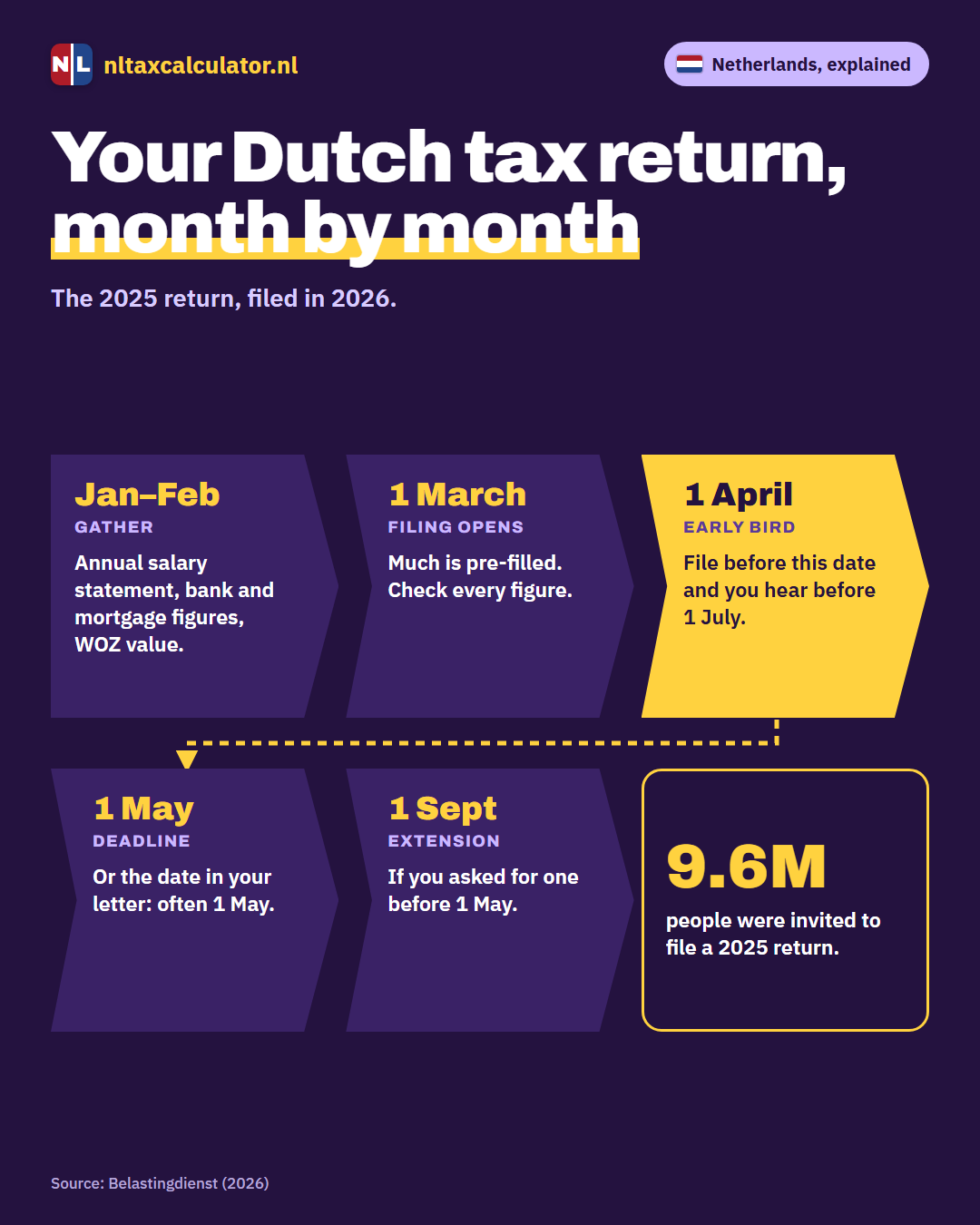
- 4Missing the 1 May deadline
File or ask for a postponement in time to avoid a fine.
- 5Not filing when you would get money back
A refund is only paid if you file. You can file up to five years back.
- 6Ignoring the M-form in your arrival or departure year
It is a different form with its own rules.
- 7Claiming abolished deductions
Study costs, for example, are no longer deductible.
- 8Forgetting side income
Freelance work, online sales or renting out a room must be declared.
- 9Not updating your provisional assessment
A changed income means you will pay back later, possibly with interest.
- 10Mixing up the ruling and Box 3
Since 2025 the 30% ruling no longer gives partial non-resident status for Box 3 (except for existing rulings until 2026).
Made a mistake?
Before the assessment arrives, you can file a corrected return. After it, file an objection within six weeks, or ask for a correction (ambtshalve vermindering) up to five years back. See tax letter templates.
Sources
This article is based on these official pages. If anything here differs from them, the official page is right.
Ready to run your own numbers?
Full tax return calculator