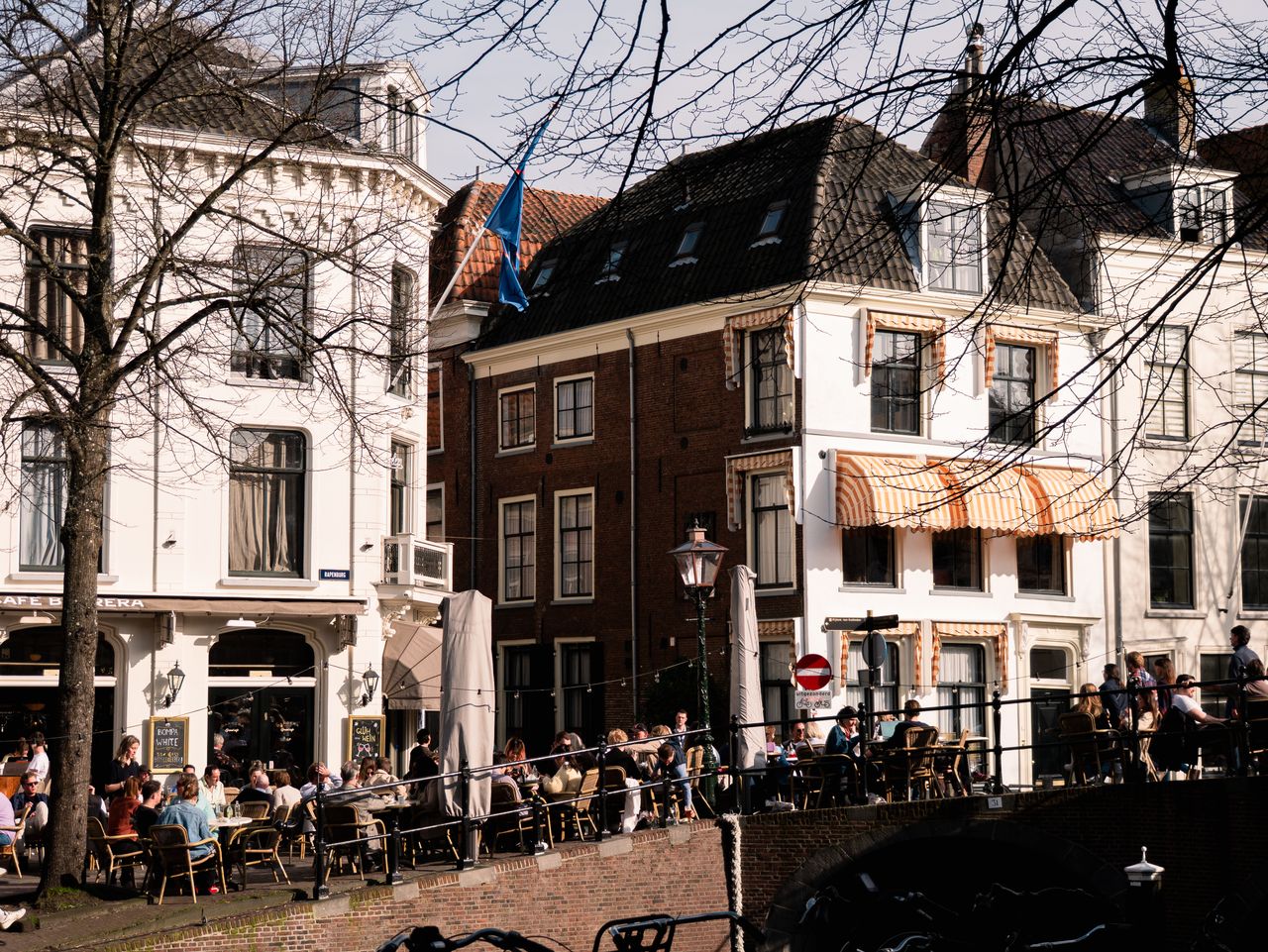
Core values in five words
Saying what you think is seen as honest and efficient, not rude. Feedback is given plainly, and expected back.
Cosy, convivial, a good atmosphere. A word used for a café, an evening, a person or a living room.
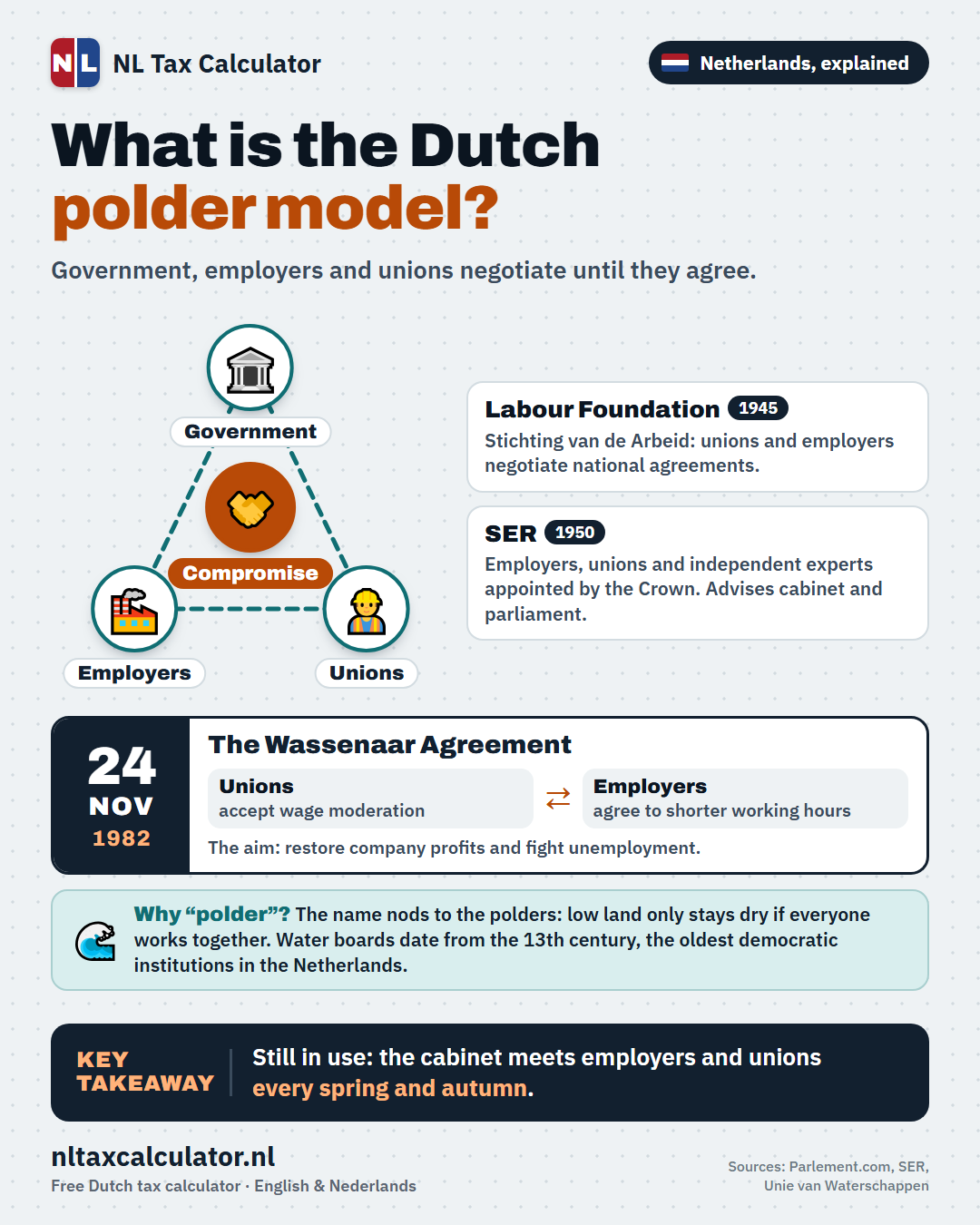
The "polder model": talk until everyone can live with the outcome. Meetings can be long, decisions stick.
"Just act normal, that's crazy enough." Showing off is frowned upon, at every income level.
Social life runs on the agenda. Dinner with friends is often booked weeks ahead.
The polder model
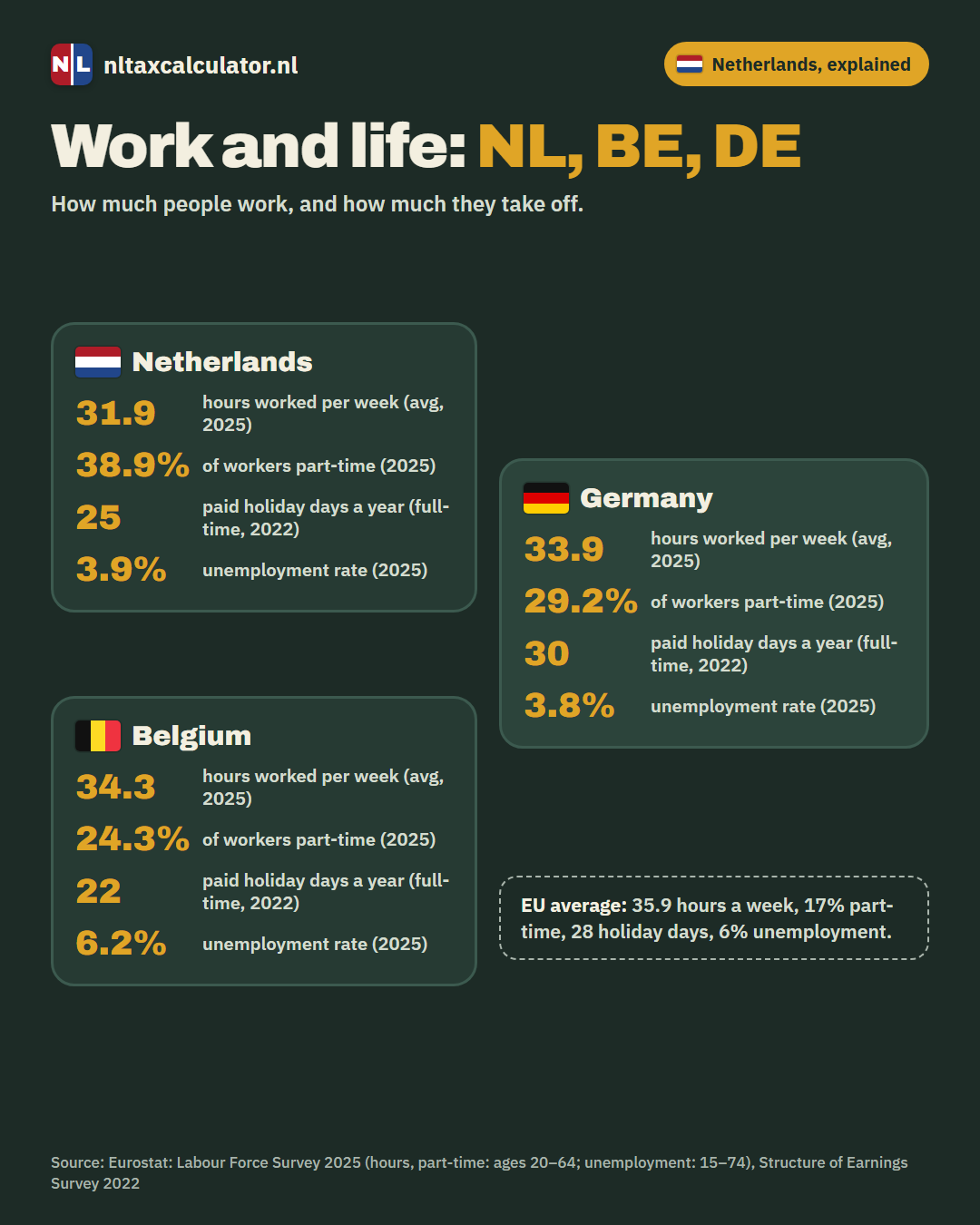
At work
| What you may expect | What is common in the Netherlands | |
|---|---|---|
| Hierarchy | Defer to the boss | Flat: interns may question the director |
| Hours | Long days show commitment | Leaving at 17:00 is normal; part-time is widespread |
| Lunch | A long, warm lunch | A quick sandwich (boterham) and a glass of milk or buttermilk |
| Disagreement | Avoid open conflict | Discuss openly, then agree and move on |
| Friday | Just another day | Friday drinks (vrijmibo or borrel) with colleagues |
Food you will meet
Chocolate sprinkles on buttered bread, for breakfast and lunch, at any age.
Two thin waffles with caramel syrup, from Gouda. Put one on top of your hot coffee to soften.
Raw herring with onions, best in early summer when the first "Hollandse Nieuwe" arrives.
Mashed potato with vegetables (kale, endive, sauerkraut), with a smoked sausage. Winter food.
Gouda, Edam, Leerdammer. Graded by age: jong, belegen, oud.
Fries with mayonnaise, and deep-fried ragout balls with mustard at every borrel.
Sport and sports clubs
The most successful nation in Olympic speed skating. Thialf in Heerenveen is the temple of the sport.
Both the women's and men's teams are among the best in the world.
From Marianne Vos to Mathieu van der Poel, and a whole nation on bikes.
Max Verstappen made orange the colour of the grandstands.
A mixed-gender team sport invented in Amsterdam in 1902 by Nico Broekhuysen.
The legendary 200 km skating tour, only held when the ice is thick enough.
Sport in the Netherlands runs on local clubs (verenigingen) with volunteers. Membership is affordable and the club bar after the game is where friendships are made. Low-income families can often get help with membership fees through their municipality.
Bikes everywhere
There are more bicycles than people. Cycling is transport, not sport: to school, to work, to the station, in a suit or with two children in a bakfiets. Get good lights and two locks, and learn the hand signals.
More on getting around in public transport in the Netherlands.
Sources
This article is based on these official pages. If anything here differs from them, the official page is right.
Social habits newcomers notice
At a Dutch birthday, guests sit in a circle and you congratulate everyone, not just the person whose birthday it is: "gefeliciteerd met je moeder!"
Close friends and family greet with three kisses on the cheek (right, left, right). With colleagues and strangers: a firm handshake.
Splitting the bill is normal, often to the cent via a payment request (Tikkie) after dinner.
The famous single biscuit from the tin is mostly a joke today, but modesty around food and spending is real.
Five minutes late to a meeting is late. Dinner at 18:00 means 18:00, and dinner is early by southern European standards.