Water in numbers
Centuries of engineering
- Middle AgesDikes and the first water boards
Farmers joined forces to build and maintain dikes, the start of the water boards.
- 1600sWindmills drain lakes
The Beemster (1612) was among the first large lakes pumped dry; it is now UNESCO World Heritage.
- 1684NAP
The Amsterdam water level became the reference for heights: Normaal Amsterdams Peil.
- 1932The Afsluitdijk
A 32 km dam closed off the Zuiderzee, which became the IJsselmeer; Flevoland was reclaimed from it.
- 1953The North Sea flood
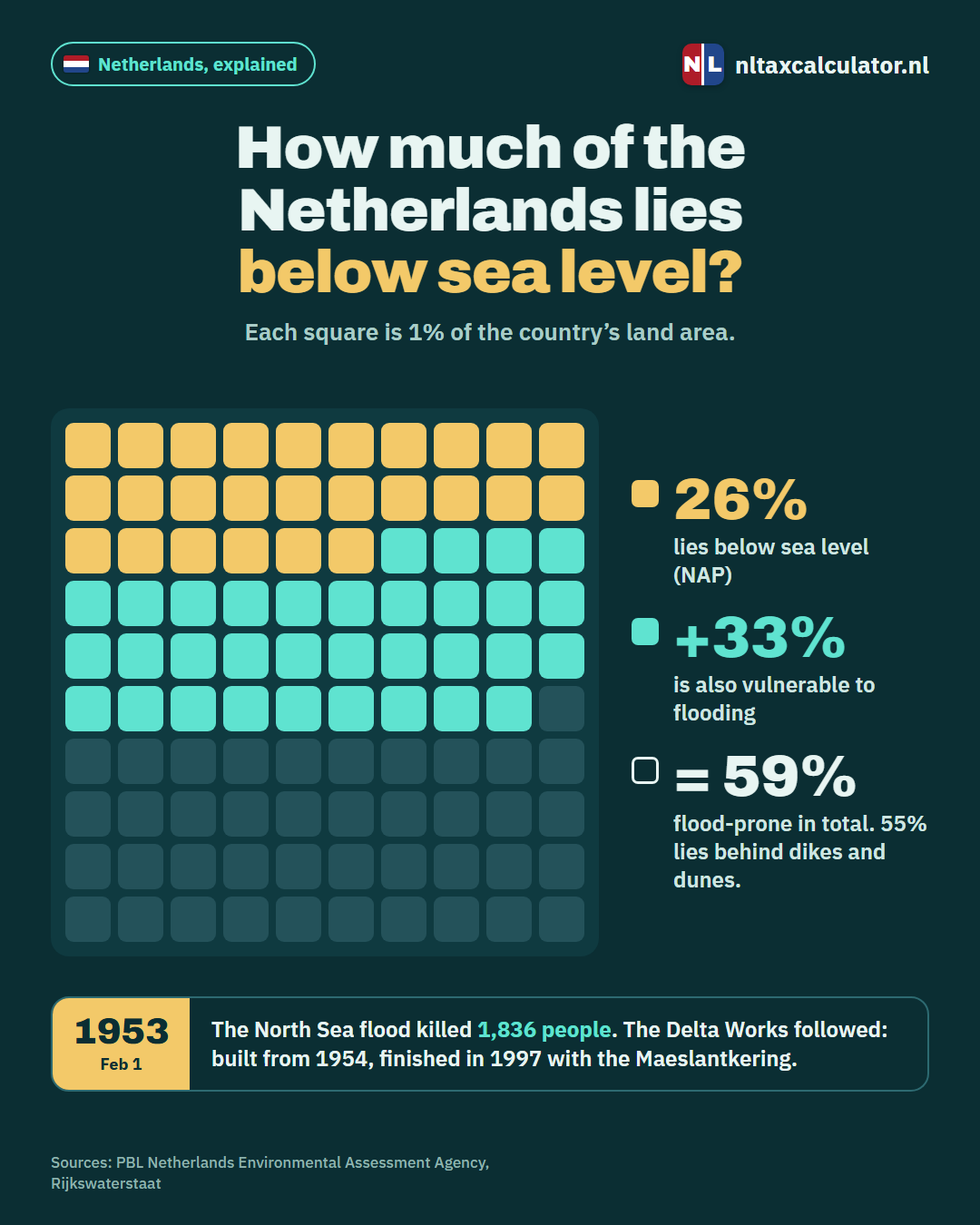
1,836 people died in Zeeland, South Holland and North Brabant.
- 1954–1997The Delta Works
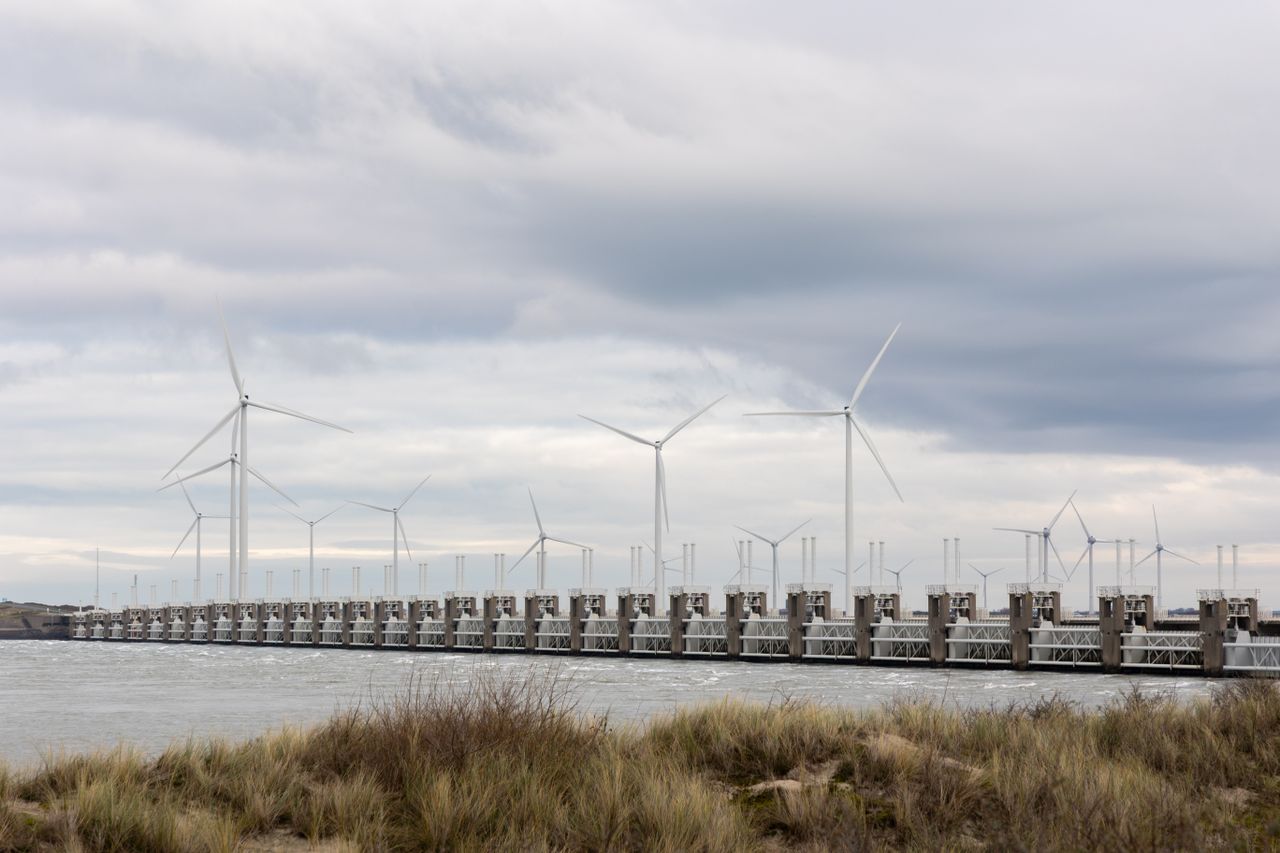
Dams and storm surge barriers, from the Oosterscheldekering (1986) to the Maeslantkering (1997).
- 2000sRoom for the River
Instead of only higher dikes: wider floodplains and side channels so rivers can safely carry more water.
How a polder works
- 1Build a dike around the land
The dike keeps outside water out.
- 2Dig ditches
Rainwater and seepage collect in a network of ditches.
- 3Pump the water up and out
Once by windmills, now by electric pumping stations, into higher canals (boezem) and out to sea or river.
- 4Keep the level right
The water board keeps the water at an agreed level: too low damages wooden foundations, too high floods fields.
Your water board charges its own tax and is elected separately. See the Netherlands at a glance.
Sources
This article is based on these official pages. If anything here differs from them, the official page is right.