From search to keys
- 1Search widely
Large rental websites, social housing portals (with waiting lists), local agencies and your network.
- 2Prepare your documents
ID, employer statement or contract, recent payslips and bank statements. Many landlords ask for an income of 3 to 4 times the rent.
- 3View in person or by video
Never pay anything before you have seen the home and met the landlord or agent.
- 4Check the rent
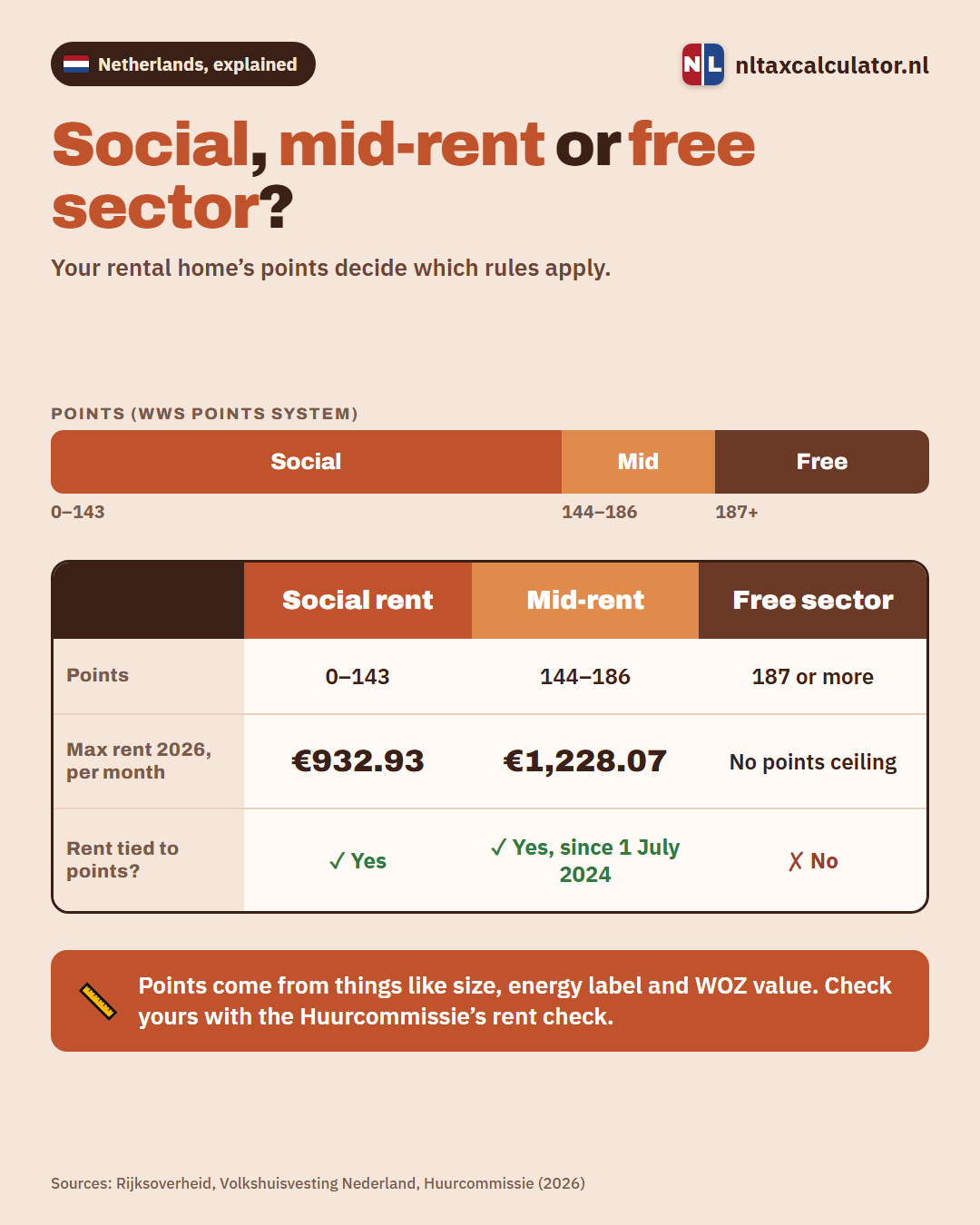
Use the points system: many homes have a legal maximum rent. See cost of living.
- 5Sign and pay the deposit
For new contracts the deposit may be at most two months' basic rent.
- 6Register at the address
You must register with the municipality; a landlord may not forbid this.
Your rights as a tenant
Since 1 July 2024 rental contracts are in principle for an indefinite period, with limited exceptions (for example for students).
An agent working for the landlord may not charge you, the tenant.
The rent tribunal can lower a rent that is too high and rules on service costs and defects.
The landlord handles major repairs; small daily repairs are usually yours.
Spotting a scam
- The rent is far below the market and the landlord is "abroad".
- You are asked to pay a deposit or "reservation fee" before viewing.
- Pressure to decide within hours, or payment by money transfer services.
- The landlord refuses to let you register at the address.
Sources
This article is based on these official pages. If anything here differs from them, the official page is right.
- Huurcommissie (in Dutch)
- Huurwoning (Rijksoverheid) (in Dutch)
- Housing (Government.nl)
Ready to run your own numbers?
Rent vs buy calculator