Groningen in numbers
What life is like
The 1977 traffic plan split the centre into zones cars can't drive between. Most people cycle everywhere.
The university and Hanze University of Applied Sciences bring tens of thousands of students.
The colourful Groninger Museum (1994) and the Forum culture building on the Grote Markt.
Wide open countryside, wierden villages and the Wadden coast within cycling distance.
The gas earthquakes
Decades of gas extraction from the huge Groningen field caused earthquakes that damaged thousands of homes in the province. Extraction ended in 2024, and damage repair and reinforcement programmes are still running. If you buy a home in the province, ask about damage claims and reinforcement status.
Things to do
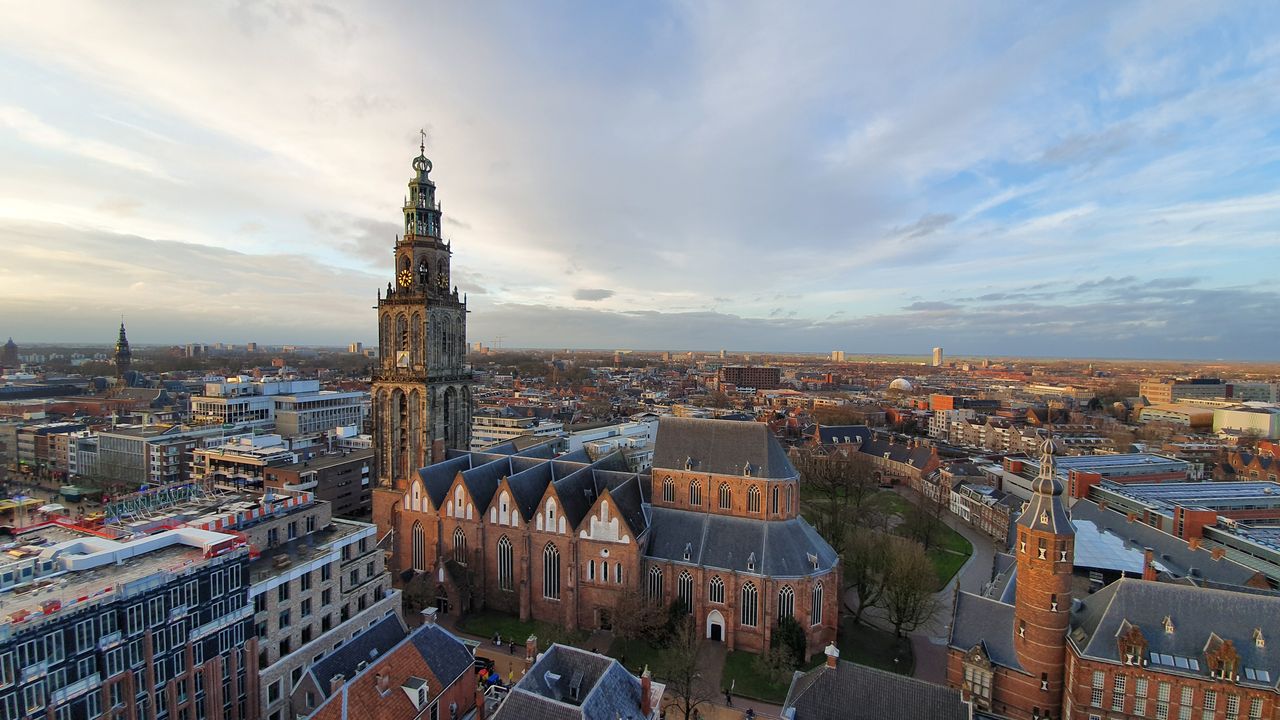
- Climb the Martinitoren, the city's "d'Olle Grieze".
- Relax in the Prinsenhof gardens or Noorderplantsoen park.
- Visit the Groninger Museum.
- Day trip to the Wadden Sea and the island of Schiermonnikoog.
Studying here? Read Dutch universities. Working? See €60k after tax.
Sources
This article is based on these official pages. If anything here differs from them, the official page is right.
Ready to run your own numbers?
Monthly budget calculator