
How expensive is it?
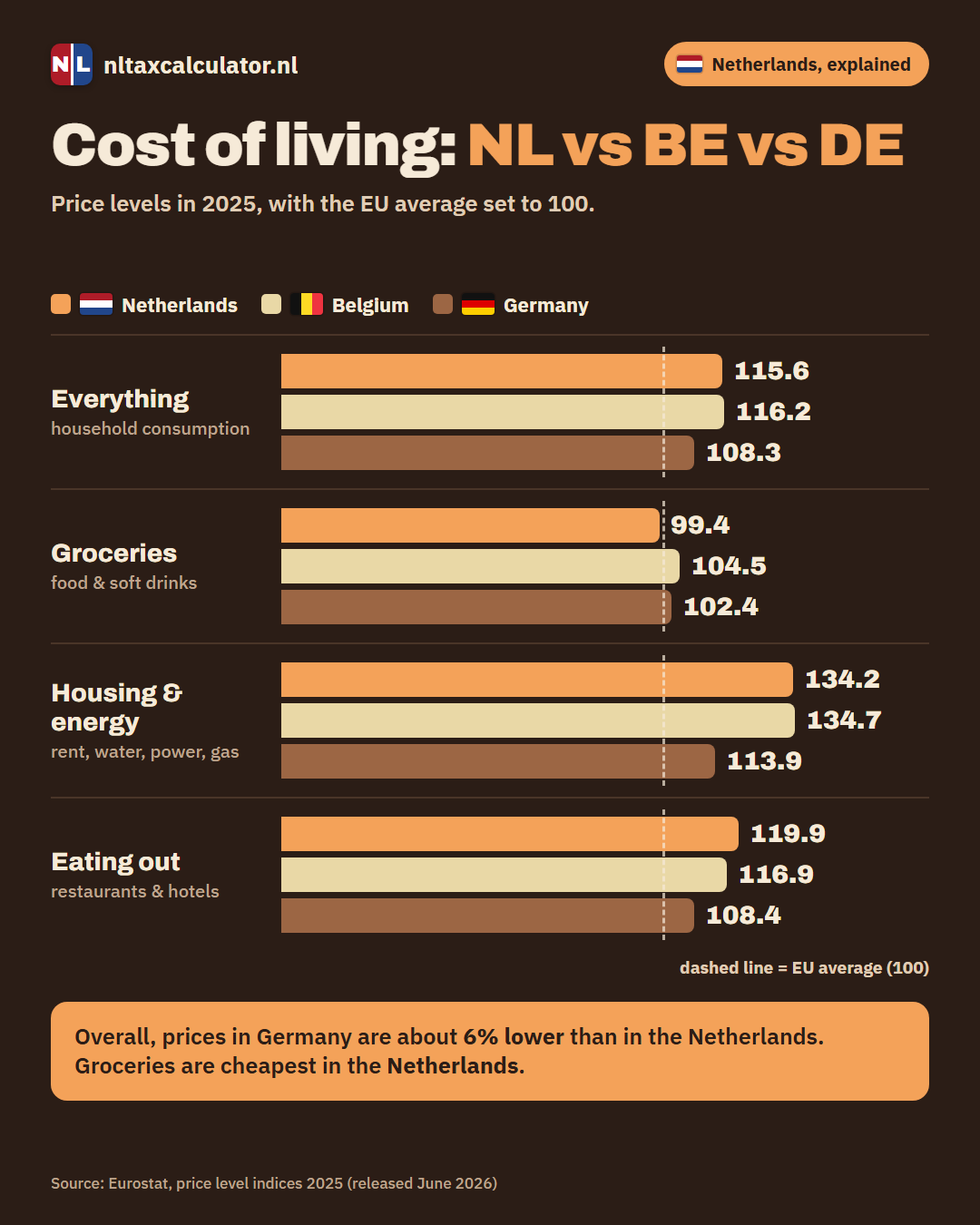
The headline: housing is the big cost; supermarket food is not. Most budgets are decided by where you live and how much space you rent.
Housing and rent rules
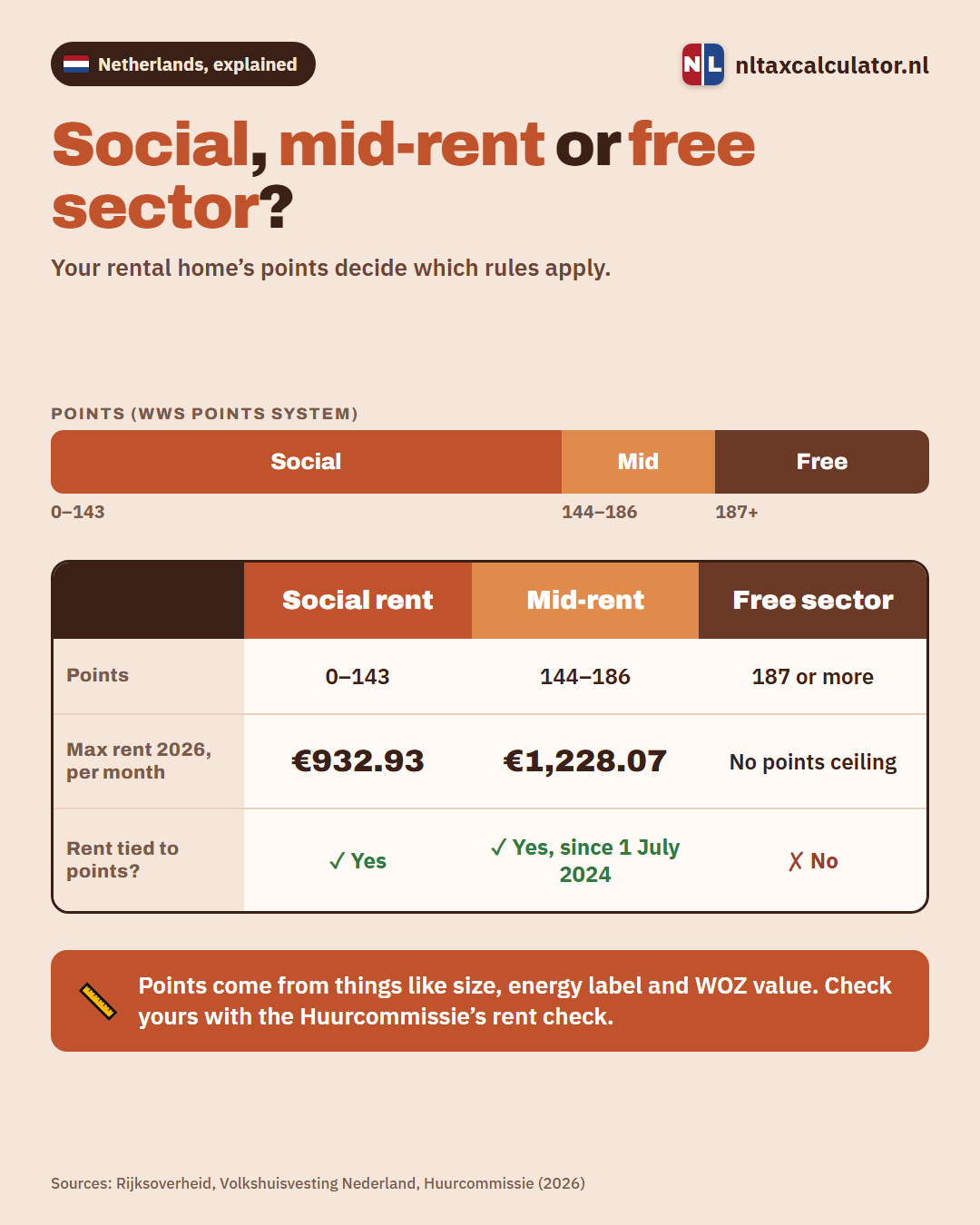
Rented homes get points (the woningwaarderingsstelsel) for size, energy label, kitchen, bathroom and the WOZ value. The points decide the maximum legal rent.
| Social | Mid-rent | Free sector | |
|---|---|---|---|
| Points | up to 143 | 144 to 186 | 187 and up |
| Maximum rent 2026 | €932.93 | €1,228.07 | No maximum |
| Who gets it | Waiting lists, income limits | Regulated since 1 July 2024 | Open market |
Paying too much? The Huurcommissie (rent tribunal) can lower your rent. And if you buy instead: rent vs buy calculator.
Fixed monthly costs to plan for
Usually the biggest item. Energy is often not included in the rent.
Mandatory for residents. Premiums are set by each insurer every November. Low incomes get zorgtoeslag.
Monthly advance payments, settled once a year against actual use.
Waste collection, sewage and water board taxes, billed yearly. Low incomes can ask for an exemption.
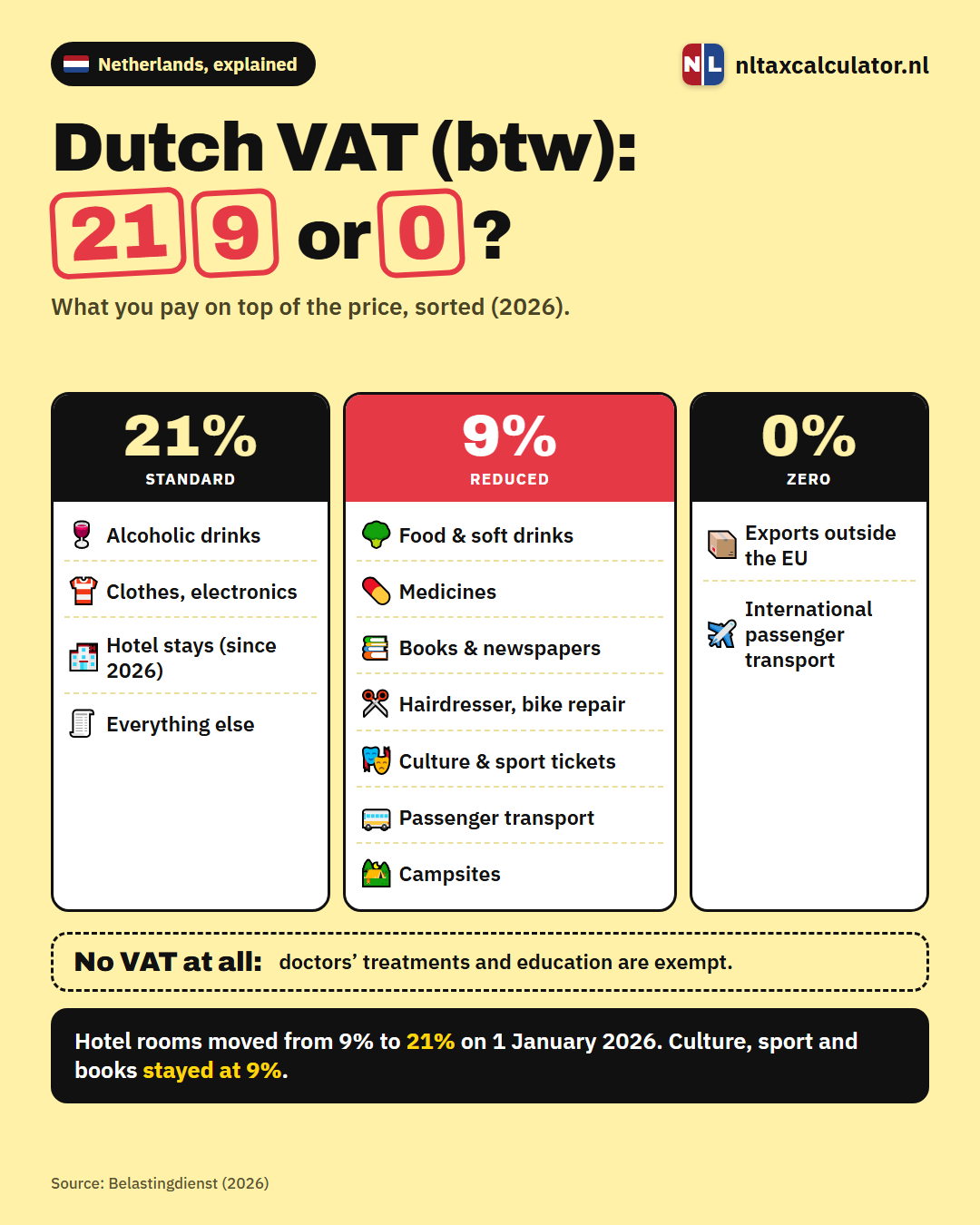
Fibre is common. Prepaid and SIM-only phone plans are cheap.
A bike is cheapest. Public transport is good but not cheap; employers often pay a travel allowance.
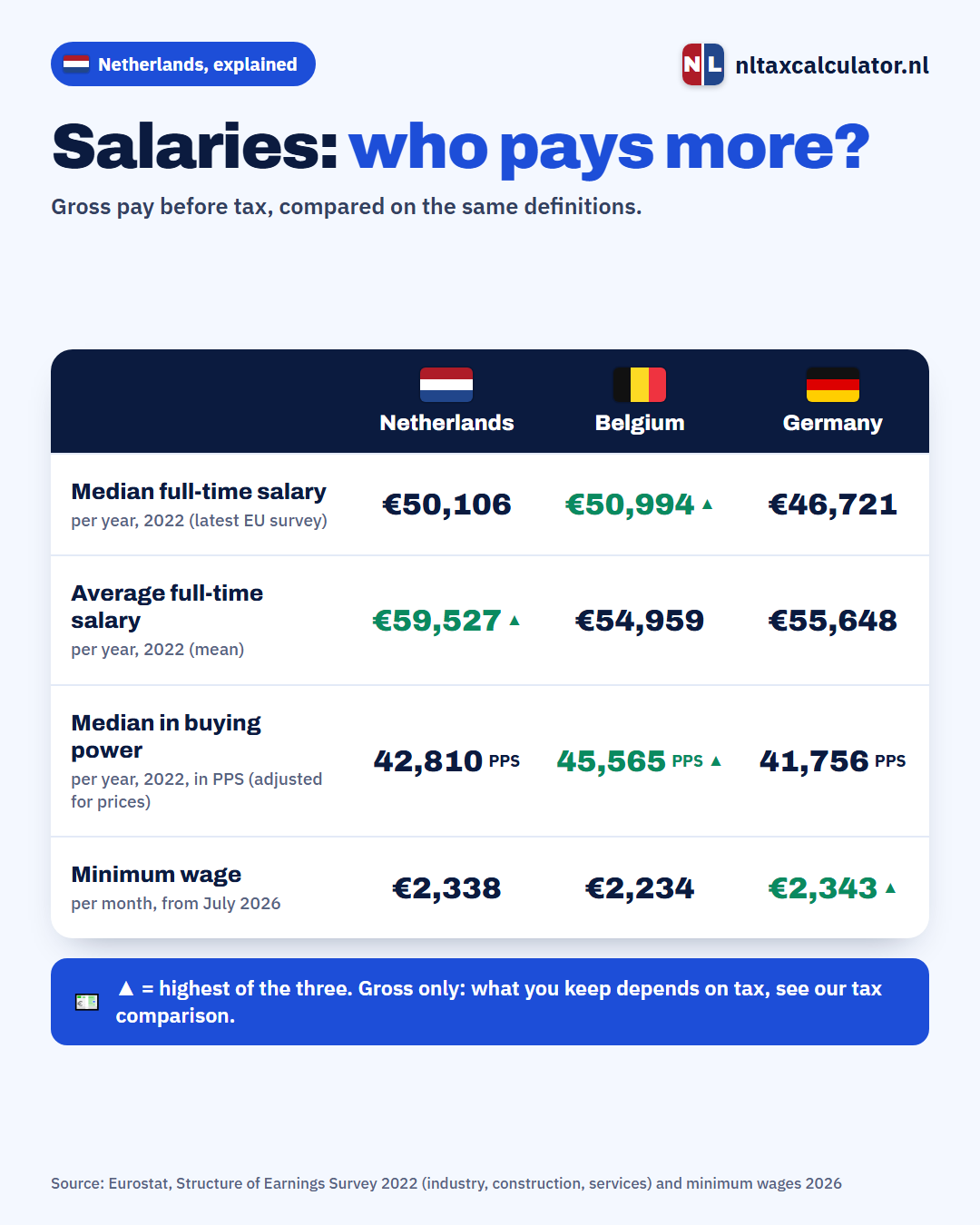
What people earn
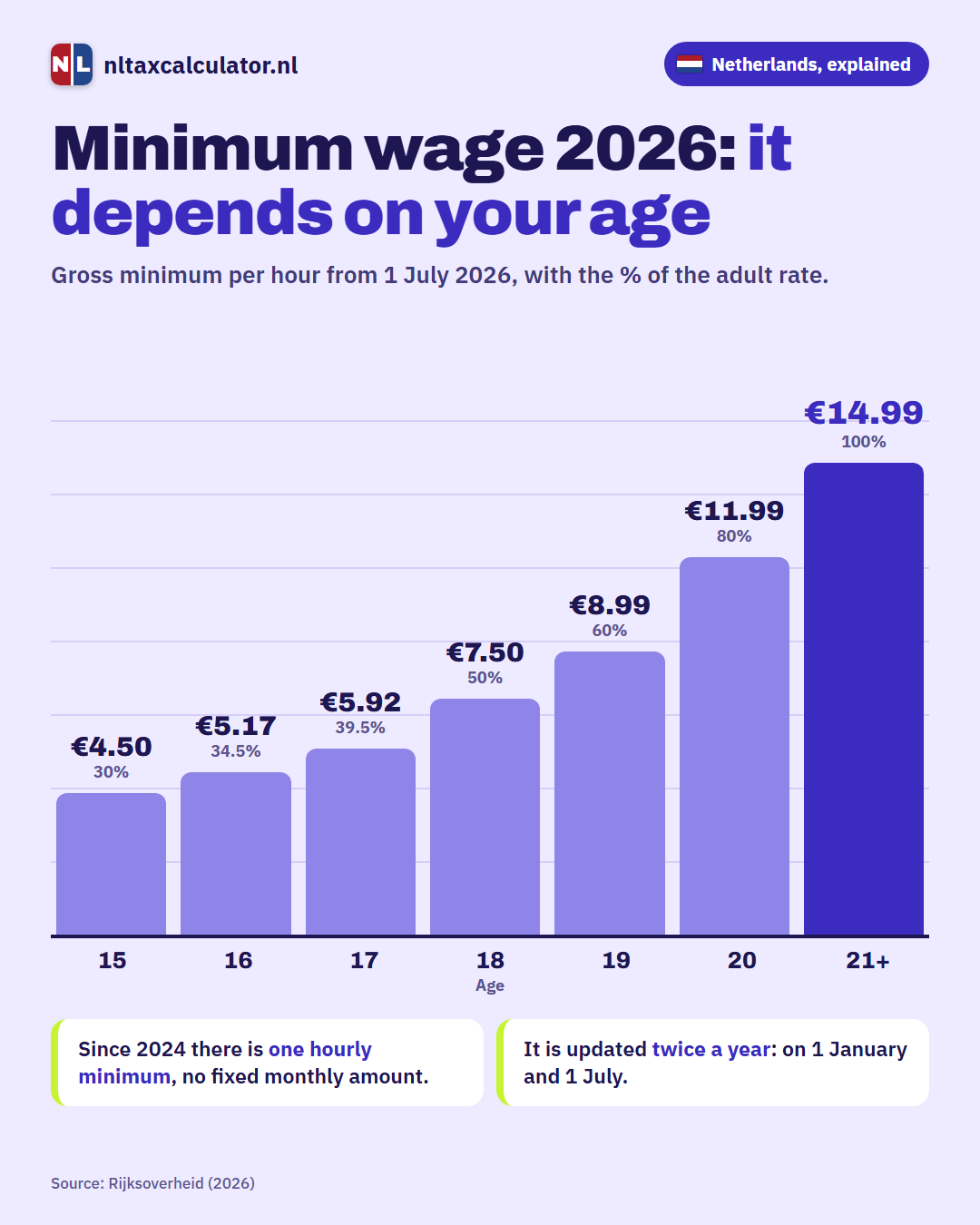
On top of the salary, employees get at least 8% holiday allowance (usually paid in May) and often a 13th month. See what a salary is worth after tax with the take-home salary calculator.
Ways to save
- 1Check your benefits
Rent, healthcare and childcare allowances can be worth hundreds a month. Try the toeslagen calculator.
- 2Compare health insurance yearly
Basic cover is identical everywhere; only the price and service differ.
- 3Shop at discounters and markets
Prices vary a lot between supermarket chains. Weekly markets are good for fruit and vegetables.
- 4Use off-peak travel
NS off-peak subscriptions give 40% discount outside rush hour.
- 5Get a Museumkaart
One yearly card for free entry to hundreds of museums.
Sources
This article is based on these official pages. If anything here differs from them, the official page is right.
Ready to run your own numbers?
Monthly budget calculator