Early history to the Dutch Revolt
- 1st c. ADThe Roman frontier
The Rhine forms the northern border of the Roman Empire: the Lower Germanic Limes, now a UNESCO World Heritage site.
- 800sFrisians, Franks and Vikings
The region is part of the Frankish empire and regularly raided by Vikings.
- 1000s+Building against the water
Dikes, polders and the first water boards; towns grow on trade.
- 1400sBurgundy and the Habsburgs
The Low Countries are united under the Burgundian dukes, then inherited by the Habsburgs.
- 1568The Eighty Years' War begins
William of Orange leads the revolt against Spanish rule. The national anthem, the Wilhelmus, is about him.
- 1579Union of Utrecht
The northern provinces join forces, the foundation of the Republic.
The Republic and the Golden Age
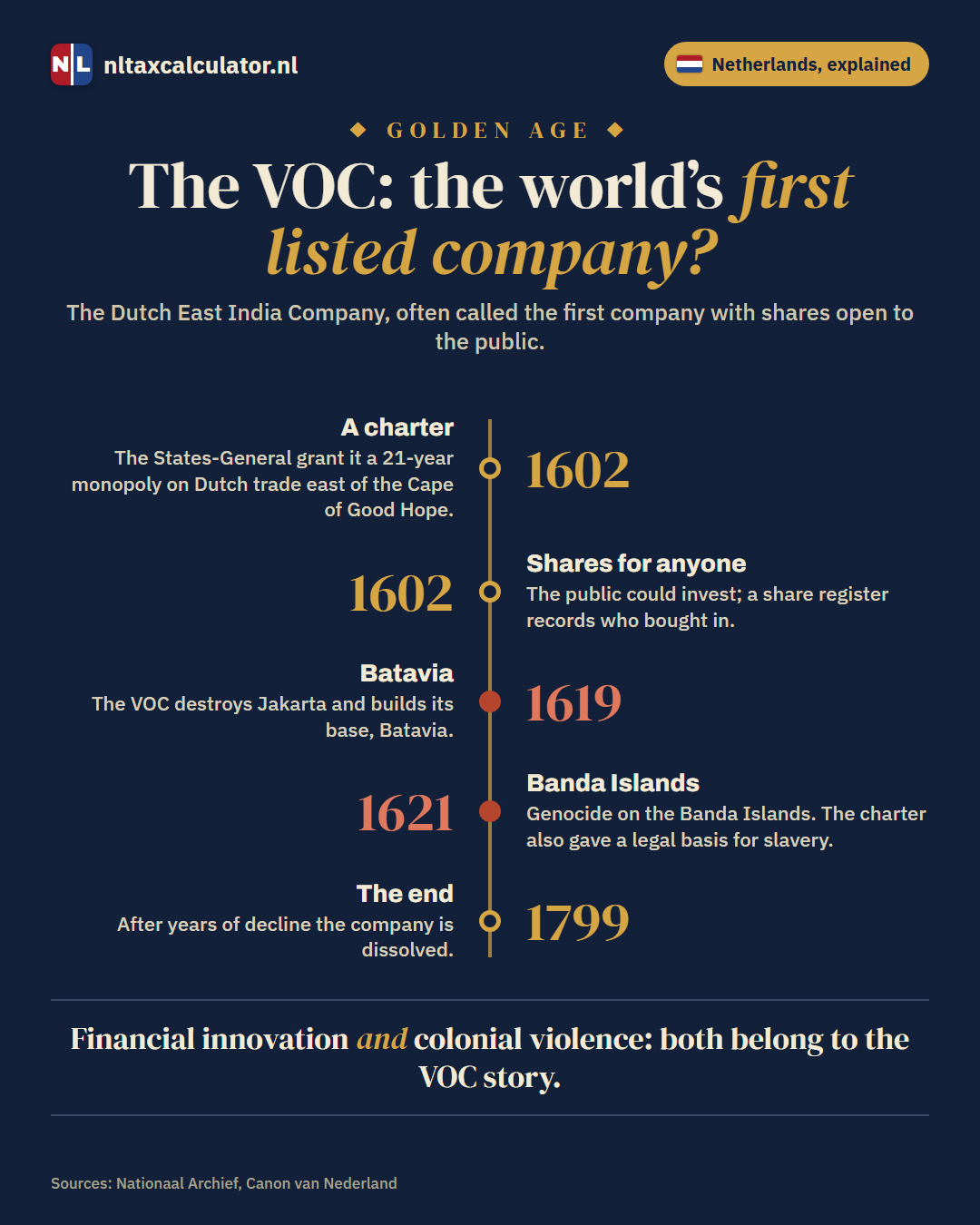
- 1602The VOC is founded
The Dutch East India Company, often called the first listed company.
- 1600sThe Golden Age
Amsterdam becomes the centre of world trade. Rembrandt, Vermeer and Frans Hals paint; Spinoza and Huygens think and write.
- 1621Violence in the colonies
Under the VOC, most inhabitants of the Banda Islands are killed or driven out. Dutch traders are also deeply involved in the transatlantic slave trade.
- 1648Peace of Münster
Spain recognises Dutch independence.
- 1672The Disaster Year (Rampjaar)
France, England and two German bishoprics attack at once; the Republic barely survives.
From republic to kingdom
- 1795Batavian Republic
French revolutionary troops arrive; the stadtholder flees.
- 1806Kingdom of Holland
Napoleon makes his brother Louis king; from 1810 the country is part of France.
- 1815Kingdom of the Netherlands
William I becomes the first king, of a country that includes today's Belgium.
- 1830Belgium breaks away
The Belgian Revolution; the Netherlands recognises Belgium in 1839.
- 1848Thorbecke's constitution
Ministers become responsible to parliament instead of the king: the basis of today's democracy.
- 1863Abolition of slavery
Slavery ends in Suriname and the Antilles on 1 July, remembered as Keti Koti. Enslaved people had to keep working on plantations for ten more years.
- 1919Women get the vote
Two years after universal male suffrage.
War, occupation and liberation
- 1914 to 1918Neutral in the First World War
- 10 May 1940German invasion
After the bombing of Rotterdam on 14 May, the Netherlands surrenders.
- 1940 to 1945Occupation and the Holocaust
About 102,000 of the roughly 140,000 Jews in the Netherlands are murdered. Anne Frank's diary is written in hiding in Amsterdam.
- 1944 to 1945The Hunger Winter
Around 20,000 people die of starvation in the occupied west.
- 5 May 1945Liberation
Remembered each year on 4 May (remembrance) and 5 May (Liberation Day).
The modern Netherlands
- 1945 to 1949Indonesian independence war
Indonesia declares independence in 1945; the Netherlands transfers sovereignty in 1949 after years of violent conflict.
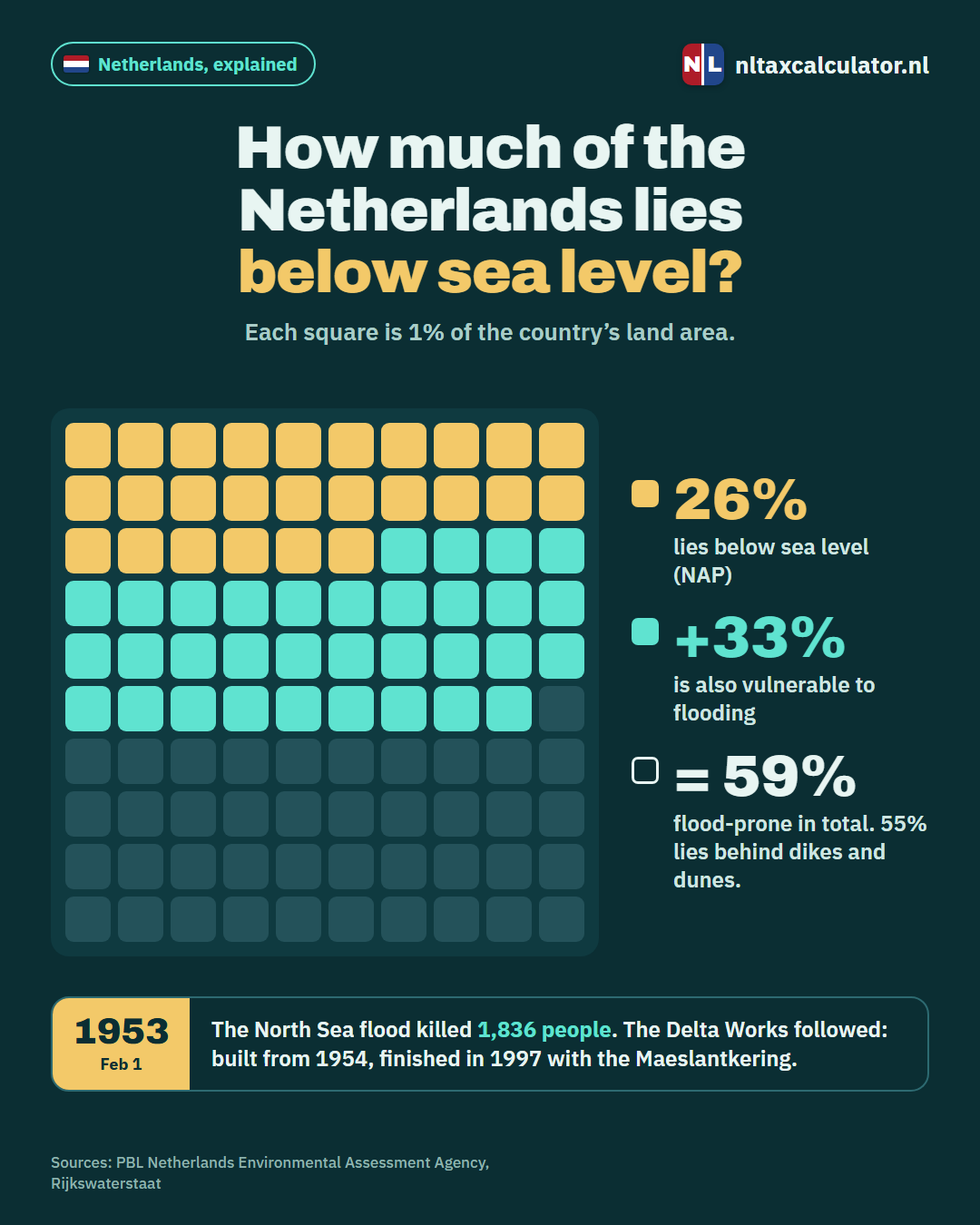
- 1953The North Sea flood
1,836 people die. The Delta Works start in 1954 and are completed with the Maeslantkering in 1997.
- 1957Founding member of the EEC
One of the six founders of what became the European Union.
- 1975Suriname independent
- 2001First country with same-sex marriage
The law takes effect on 1 April 2001.
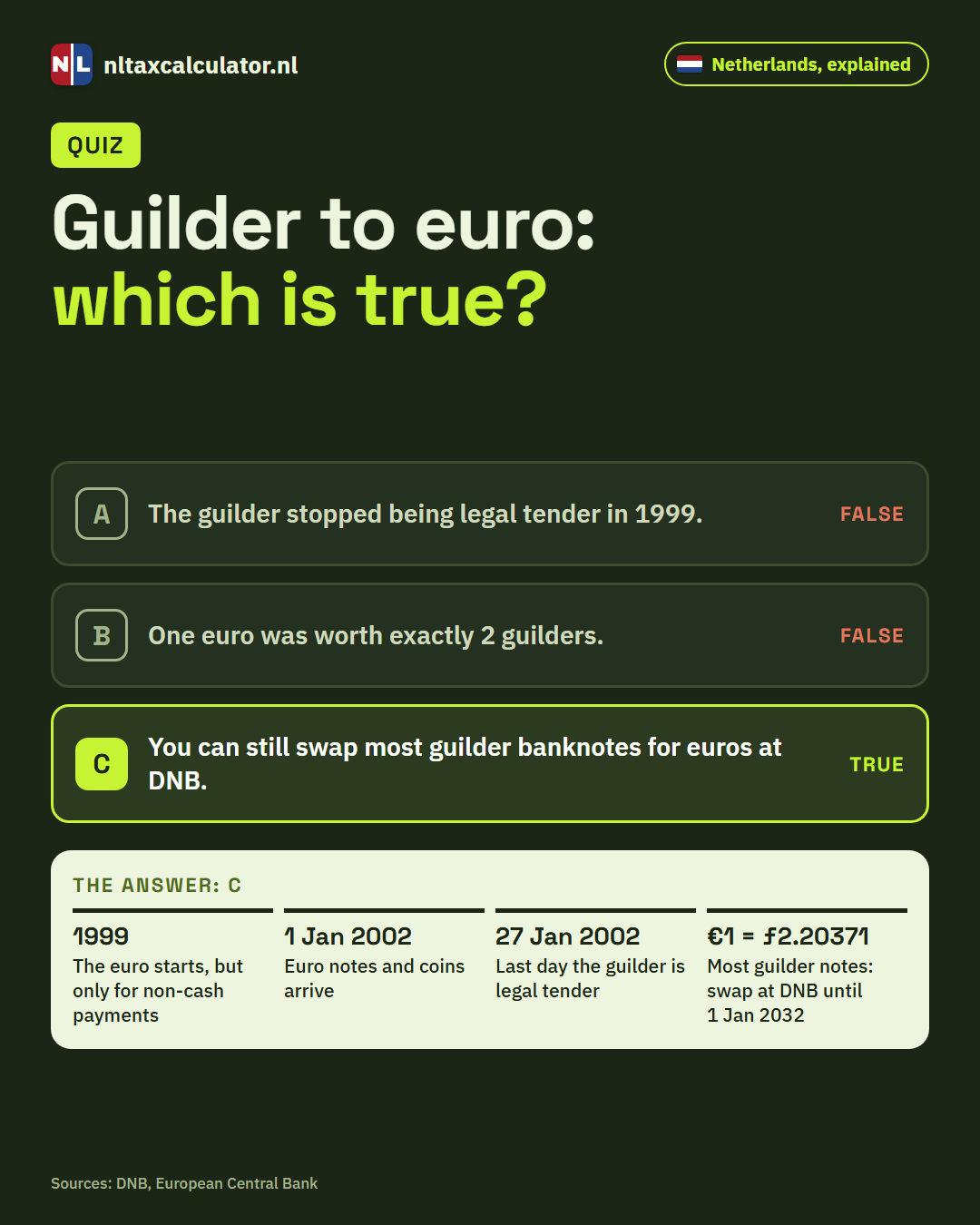
- 2002The euro replaces the guilder
€1 = ƒ2.20371.
- 2013King Willem-Alexander
Queen Beatrix abdicates; the first king in 123 years.
Dutch inventions and discoveries
- 1602The first stock exchange trading
Shares in the VOC were traded in Amsterdam.
- 1608The telescope
Spectacle maker Hans Lipperhey applied for the first patent on a telescope.
- 1620A working submarine
Cornelis Drebbel demonstrated a rowed submarine in the Thames.
- 1656The pendulum clock
Christiaan Huygens made timekeeping far more accurate. He also discovered Saturn's moon Titan.
- 1670sMicrobes
Antonie van Leeuwenhoek saw bacteria with his own microscopes, founding microbiology.
- 1903The electrocardiogram (ECG)
Willem Einthoven, Nobel Prize 1924.
- 1943The artificial kidney
Willem Kolff built the first dialysis machine during the war.
- 1963The compact cassette
Developed at Philips by Lou Ottens.
- 1982The CD
Developed by Philips together with Sony.
- 1990sWi-Fi and Bluetooth
Vic Hayes led the Wi-Fi standard work; Jaap Haartsen designed Bluetooth at Ericsson.
Sources
This article is based on these official pages. If anything here differs from them, the official page is right.