Official public holidays
- 1 January
- New Year's Day (Nieuwjaarsdag)
- March/April
- Easter Sunday and Easter Monday (Good Friday is not a general day off)
- 27 April
- King's Day (Koningsdag), 26 April if the 27th is a Sunday
- 5 May
- Liberation Day (Bevrijdingsdag): whether you are free depends on your employer or collective agreement
- 40 days after Easter
- Ascension Day (Hemelvaartsdag)
- May/June
- Whit Sunday and Whit Monday (Pinksteren)
- 25 and 26 December
- Christmas Day and Boxing Day (Eerste en Tweede Kerstdag)
Dutch employees are not legally entitled to a day off on public holidays: it depends on your contract or collective agreement, though most give them.
The festive year
- 31 Dec / 1 JanOud en Nieuw
Oliebollen (fried dough balls), champagne and fireworks at midnight; on 1 January some brave a New Year's dive into the cold North Sea.
- Feb/MarchCarnaval
Mainly in the Catholic south (Limburg and North Brabant). Three days of costumes, parades and brass bands before Lent begins. Cities take on carnival names, like Oeteldonk for Den Bosch.
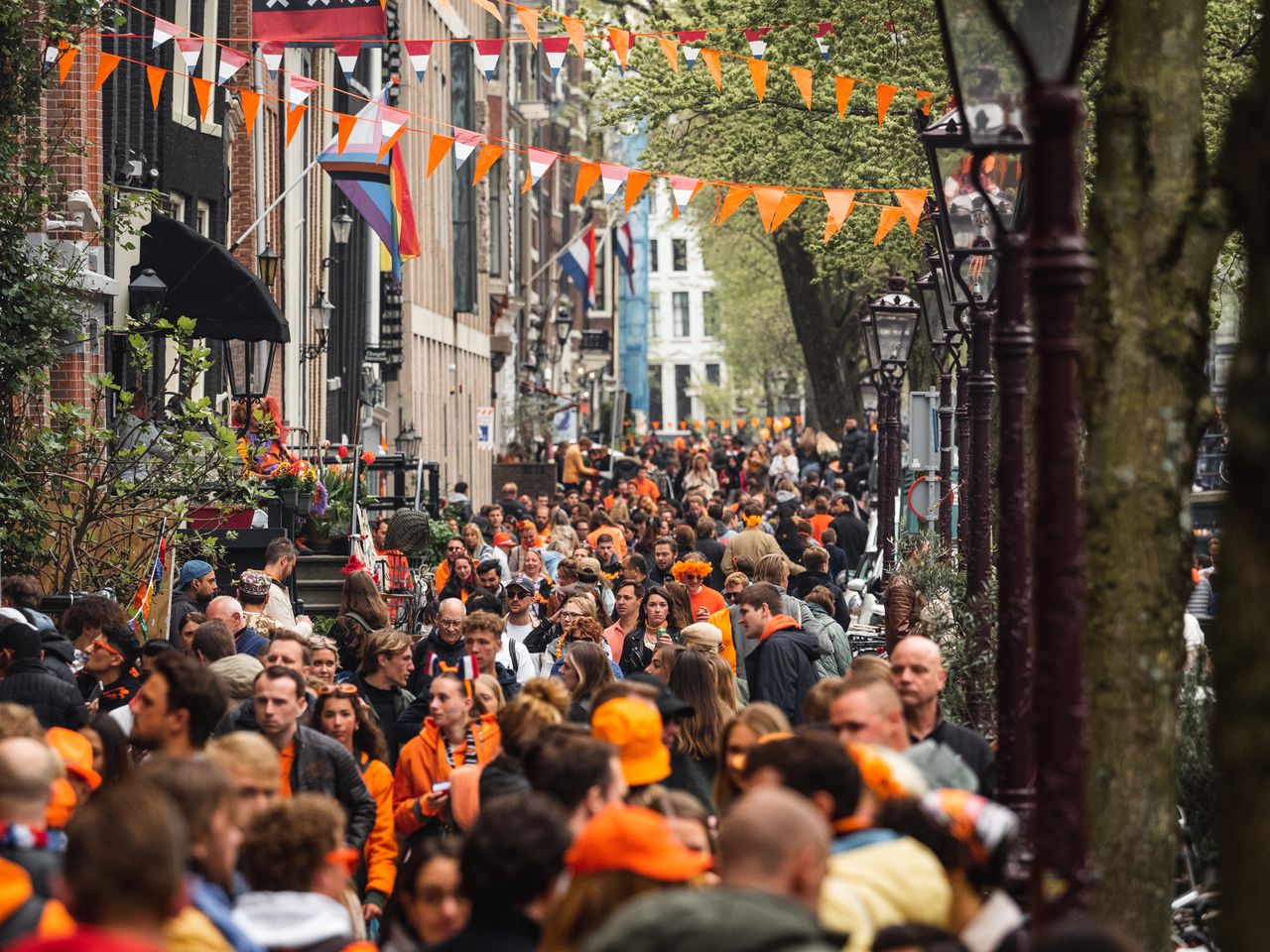
- 27 AprilKoningsdag
The King's birthday. The whole country wears orange; the streets become one big flea market (vrijmarkt) where anyone may sell without a permit.
- 4 MayDodenherdenking
Remembrance of the dead of the Second World War and later conflicts. At 20:00 the whole country falls silent for two minutes.
- 5 MayBevrijdingsdag
Celebration of the liberation in 1945, with free festivals across the country.
- 1 JulyKeti Koti
"Chains broken" in Sranan Tongo: remembrance and celebration of the abolition of slavery in 1863.
- 3rd Tuesday of SeptPrinsjesdag
The King rides to the Ridderzaal in the Glass Coach and reads the Speech from the Throne. People dress up, especially in hats.
- 11 NovemberSint-Maarten
Children walk with lanterns in the evening and sing door to door for sweets, mainly in the north and around Utrecht.
- Mid Nov to 5 DecSinterklaas
The most Dutch celebration of all. See below.
- 25 and 26 DecChristmas
Two days of family dinners, often "gourmetten" or raclette at the table.
Sinterklaas, step by step
- 1Arrival by steamboat
In mid-November Sinterklaas (Saint Nicholas, the 4th-century bishop of Myra) "arrives from Spain" by steamboat, broadcast live on TV.
- 2Shoes by the fireplace
For weeks, children put out a shoe with a carrot for his horse and find a small present or sweets in the morning.
- 3Pepernoten and chocolate letters
Small spiced biscuits and a chocolate letter of your initial are in every shop.
- 4Pakjesavond on 5 December
Presents in the evening, often with a "surprise" (a handmade disguise) and a teasing rhyming poem for each gift.
- 5A changing tradition
Sinterklaas's helper Zwarte Piet was criticised as a racist caricature; most places now use "soot-smudged" Piets instead.
Big events and festivals
Spring bulb fields bloom from around late March to May; Keukenhof garden is open only in spring.
In early August, ending with the Canal Parade of boats through the city centre.
One of the world's largest indoor jazz festivals, every July in Rotterdam.
Five days of electronic music in October, in clubs all over the city.
Tall ships on the IJ, every five years.
A legendary 200 km skating tour past eleven Frisian towns, only held when the ice is thick enough. The last one was in 1997.
Sources
This article is based on these official pages. If anything here differs from them, the official page is right.