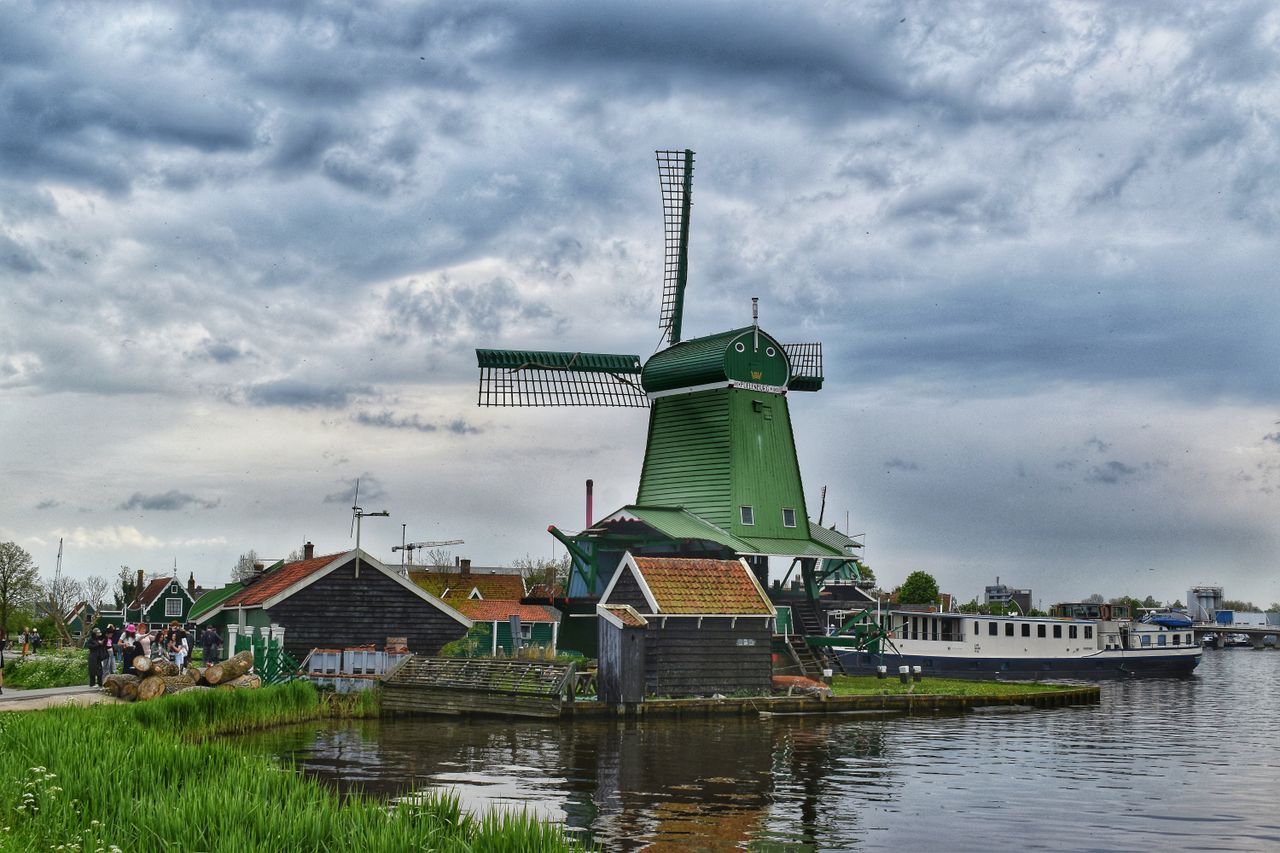
Windmills in numbers
≈ 1,200historic windmills still standing
19mills at Kinderdijk, a UNESCO World Heritage site
2nd weekend of MayNational Mill Day, when many mills open their doors
2017the craft of the miller joined UNESCO's list of intangible heritage
The main types
Drainage mill (poldermolen)
Pumped water out of the polders so land below sea level could be farmed and lived on.
Grain mill (korenmolen)
Ground grain into flour. Some still sell their own flour.
Sawmill (houtzaagmolen)
Sawed timber for the ships of the Golden Age, thanks to Cornelis Corneliszoon's wind-powered saw.
Oil mill (oliemolen)
Pressed seeds for oil; one still works at Zaanse Schans.
The language of the sails
Millers use the position of the sails to send messages: a short rest, a longer stop, a celebration such as a wedding, or mourning. In May 1940 and during the occupation, mills were also used to pass signals.
Where to visit
- Kinderdijk
- Two rows of 18th-century drainage mills near Rotterdam; you can go inside a museum mill.
- Zaanse Schans
- Working industrial mills (oil, paint, sawing) 20 minutes from Amsterdam.
- Molen De Adriaan, Haarlem
- A rebuilt mill on the Spaarne with a view over the city.
- Schiedam
- The tallest traditional windmills in the world, once used for the gin (jenever) industry.
- Your own town
- Most towns have a mill; check the opening times of local volunteers.
Sources
This article is based on these official pages. If anything here differs from them, the official page is right.
- Kinderdijk
- De Hollandsche Molen (molens.nl) (in Dutch)