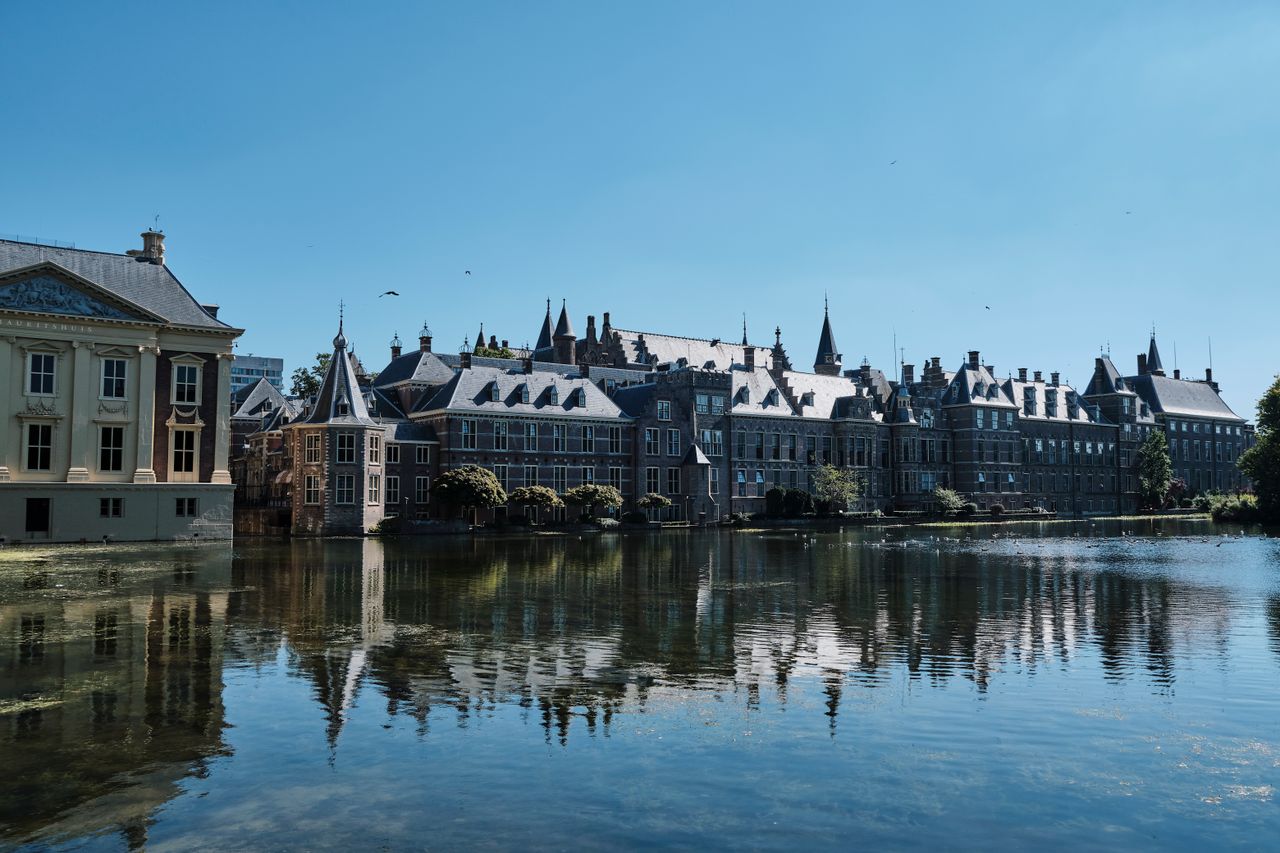
The system in one look
The Netherlands is a parliamentary democracy and a constitutional monarchy. Ministers are responsible to parliament, not the King. Because seats are handed out almost exactly in proportion to votes, many parties win seats and no party has had a majority on its own for over a century.
Two chambers, different jobs
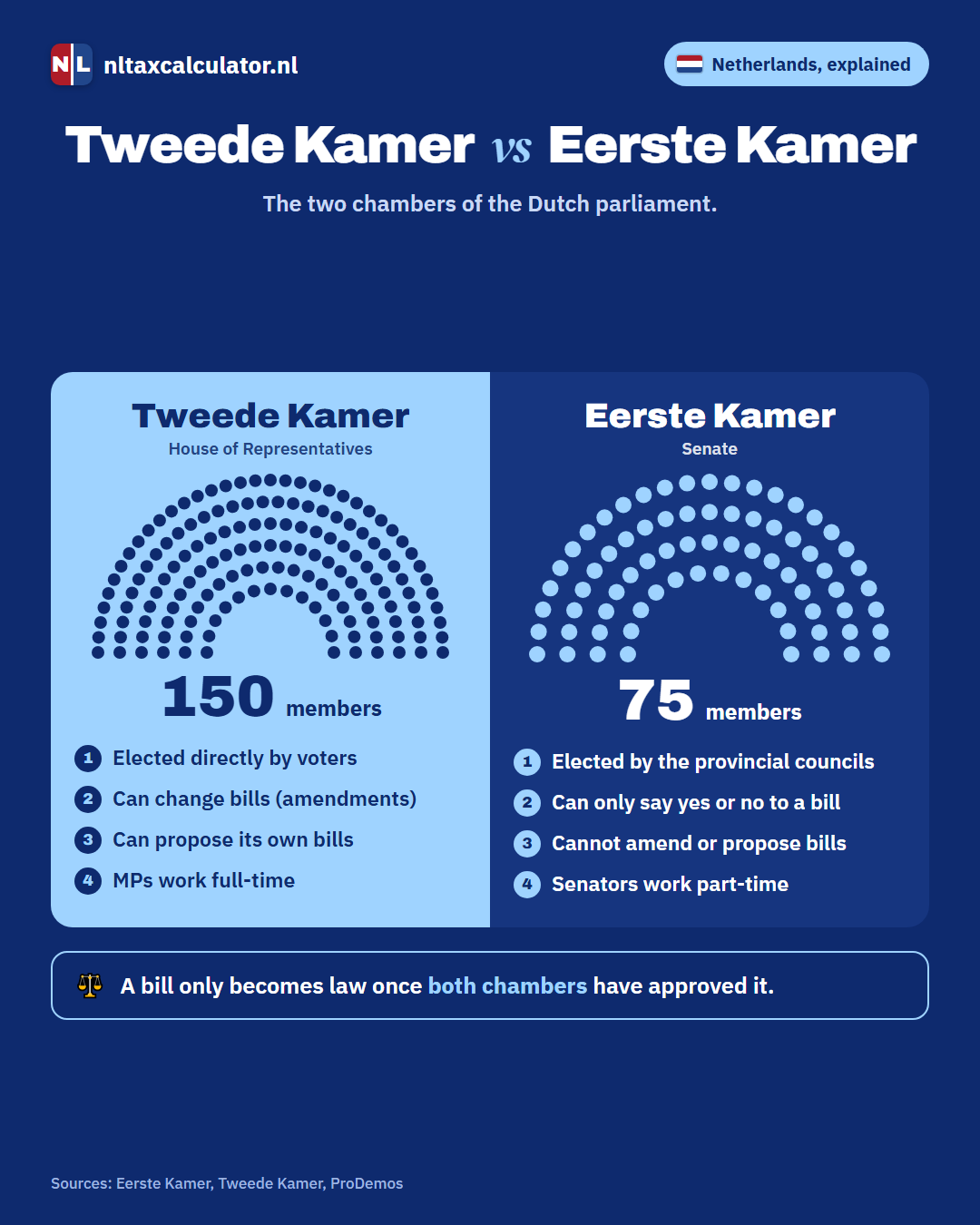
| Tweede Kamer | Eerste Kamer | |
|---|---|---|
| Members | 150 | 75 |
| Elected by | Voters directly | Members of the provincial councils |
| Can amend bills | Yes, and propose its own | No: accept or reject only |
| Works | Full time | Part time, one day a week |
From election to cabinet
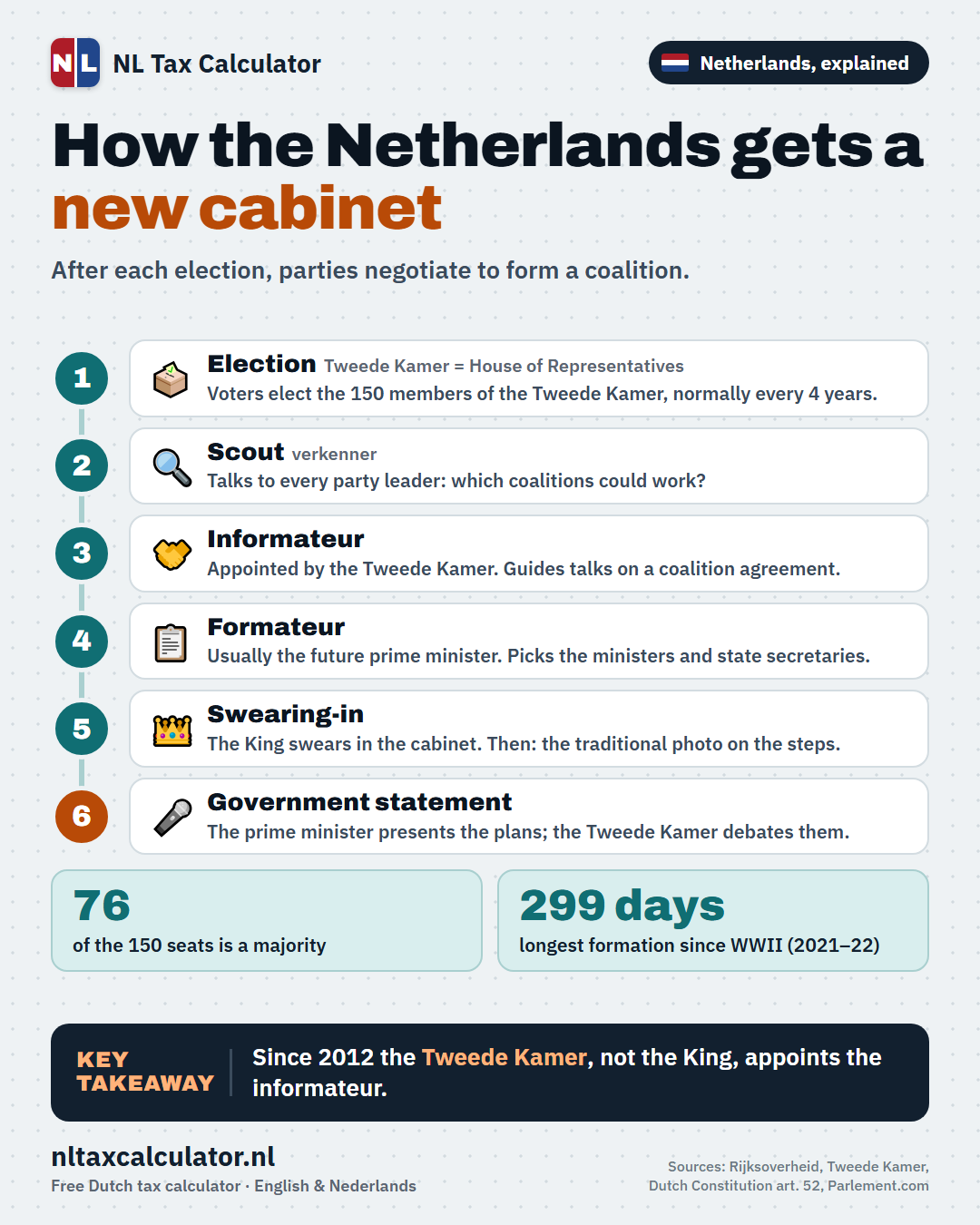
- 1Election day
Voters choose a person on a party list. Seats are shared out over parties in proportion to their votes.
- 2Exploration
The new Tweede Kamer appoints a scout (verkenner) to see which parties could work together.
- 3Negotiation
An informateur leads talks between the likely coalition parties on a coalition agreement. This can take months.
- 4Formation
A formateur, usually the future prime minister, picks the ministers and state secretaries.
- 5Swearing in
The King swears in the new cabinet at Huis ten Bosch palace, followed by the famous photo on the steps.
What the King does
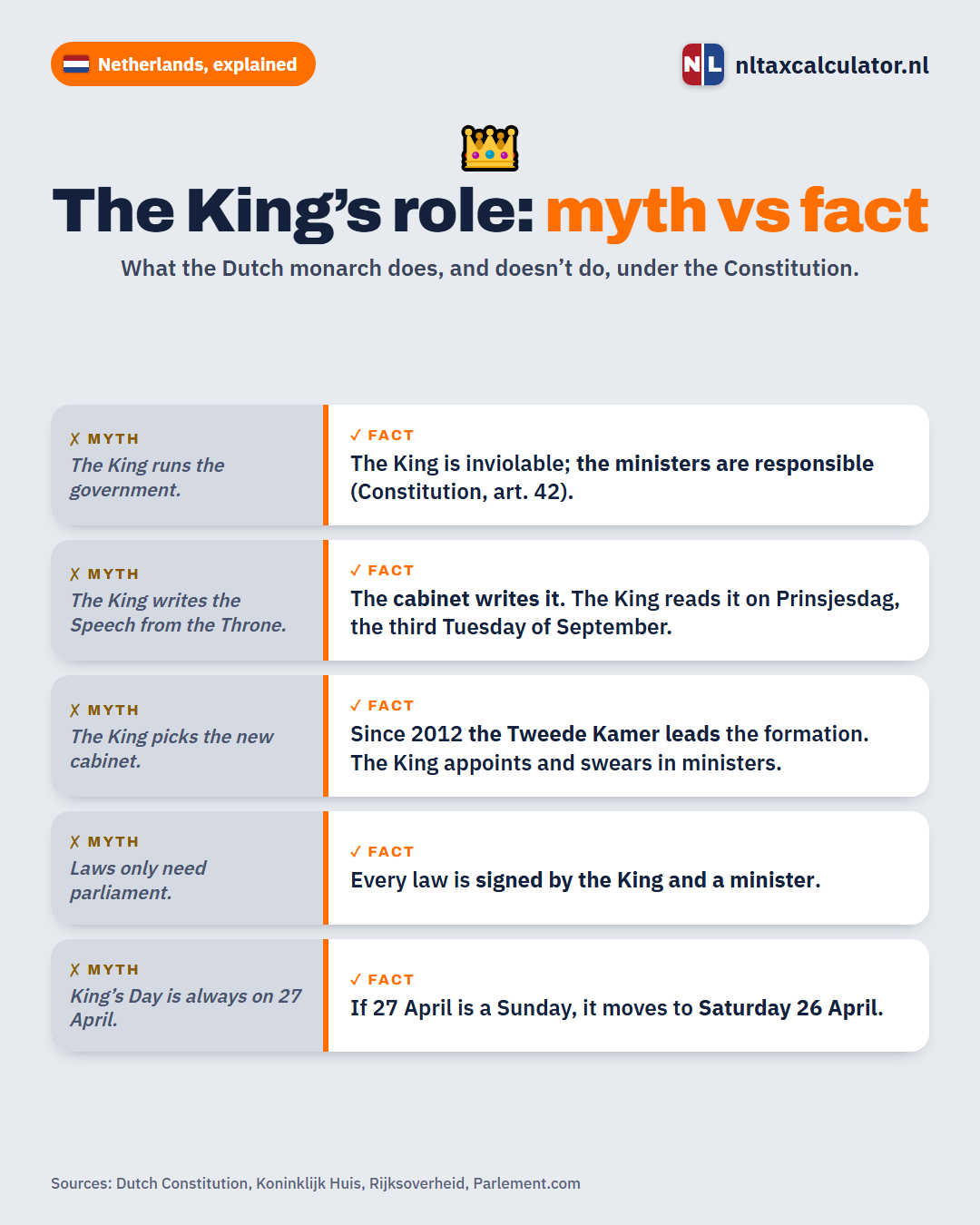
King Willem-Alexander has reigned since 30 April 2013. He is head of state and formally part of the government, but ministers carry political responsibility for everything he says and does. Since 2012 the King no longer plays a role in cabinet formation.
The royal family
Born 1967, king since 30 April 2013.
Born in Argentina in 1971, known for her work on financial inclusion.
Born 2003, heir to the throne.
Born 2005 and 2007.
Queen from 1980 to 2013, the King's mother.
Royal palaces you can visit
- Noordeinde Palace, The Hague
- The King's working palace.
- Huis ten Bosch, The Hague
- The royal family's home; new cabinets are sworn in here.
- Royal Palace Amsterdam
- On Dam Square; used for state visits and open to visitors on most other days.
- Paleis Het Loo, Apeldoorn
- A former royal palace, now a museum with famous gardens.
Key dates in the political year
- MarchMunicipal elections (every 4 years)
The latest were held in March 2026.
- MarchProvincial and water board elections (every 4 years)
Provincial councils then elect the Eerste Kamer.
- JuneEuropean Parliament elections (every 5 years)
The Netherlands elects 31 MEPs.
- 3rd Tuesday of SeptemberPrinsjesdag
The King reads the Speech from the Throne and the government presents the budget and tax plan for next year.
Europe, nation, province, town
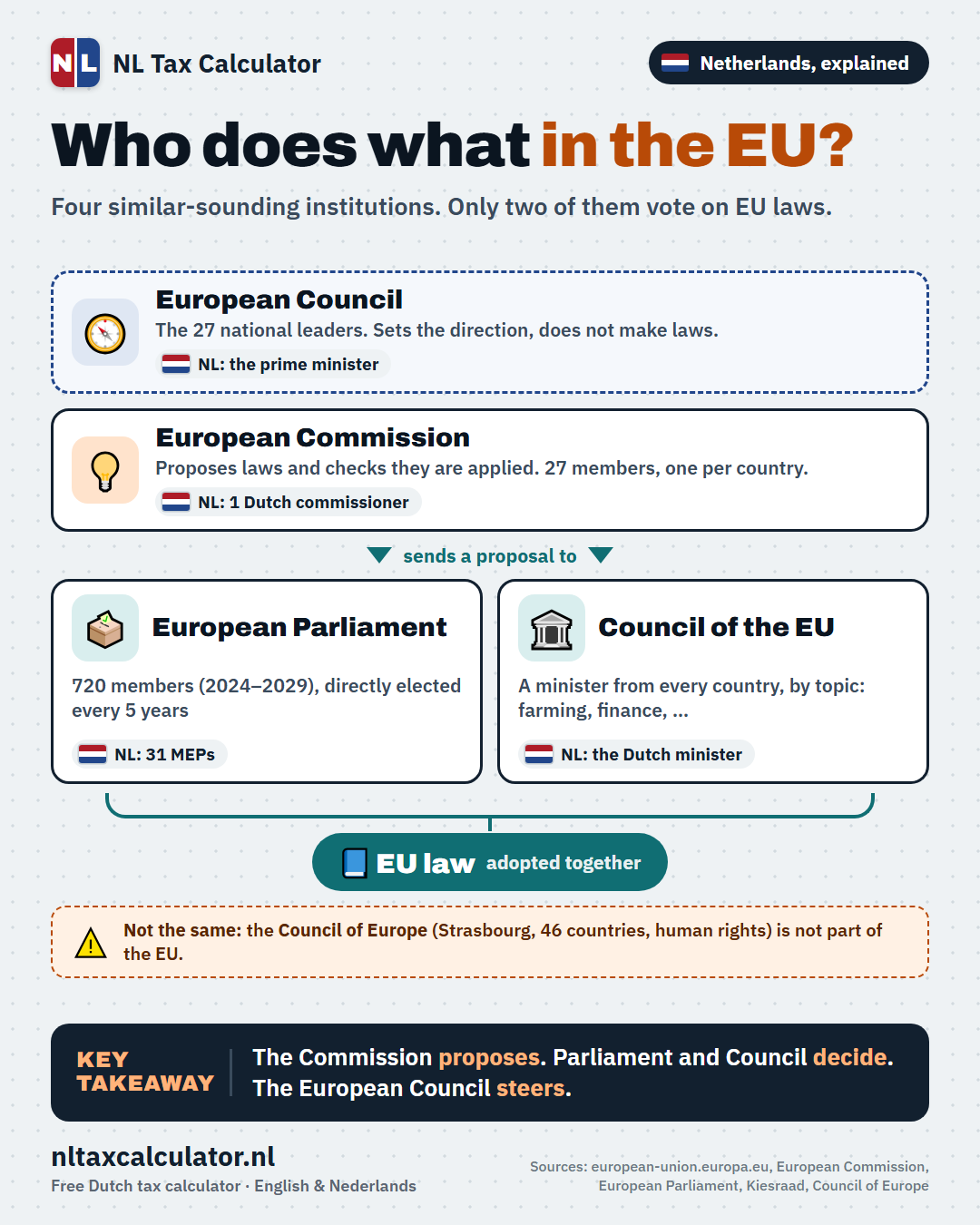
EU citizens living here can vote in municipal and European elections; non-EU residents can vote in municipal elections after five years of legal residence.
Sources
This article is based on these official pages. If anything here differs from them, the official page is right.