
The first weeks, in order
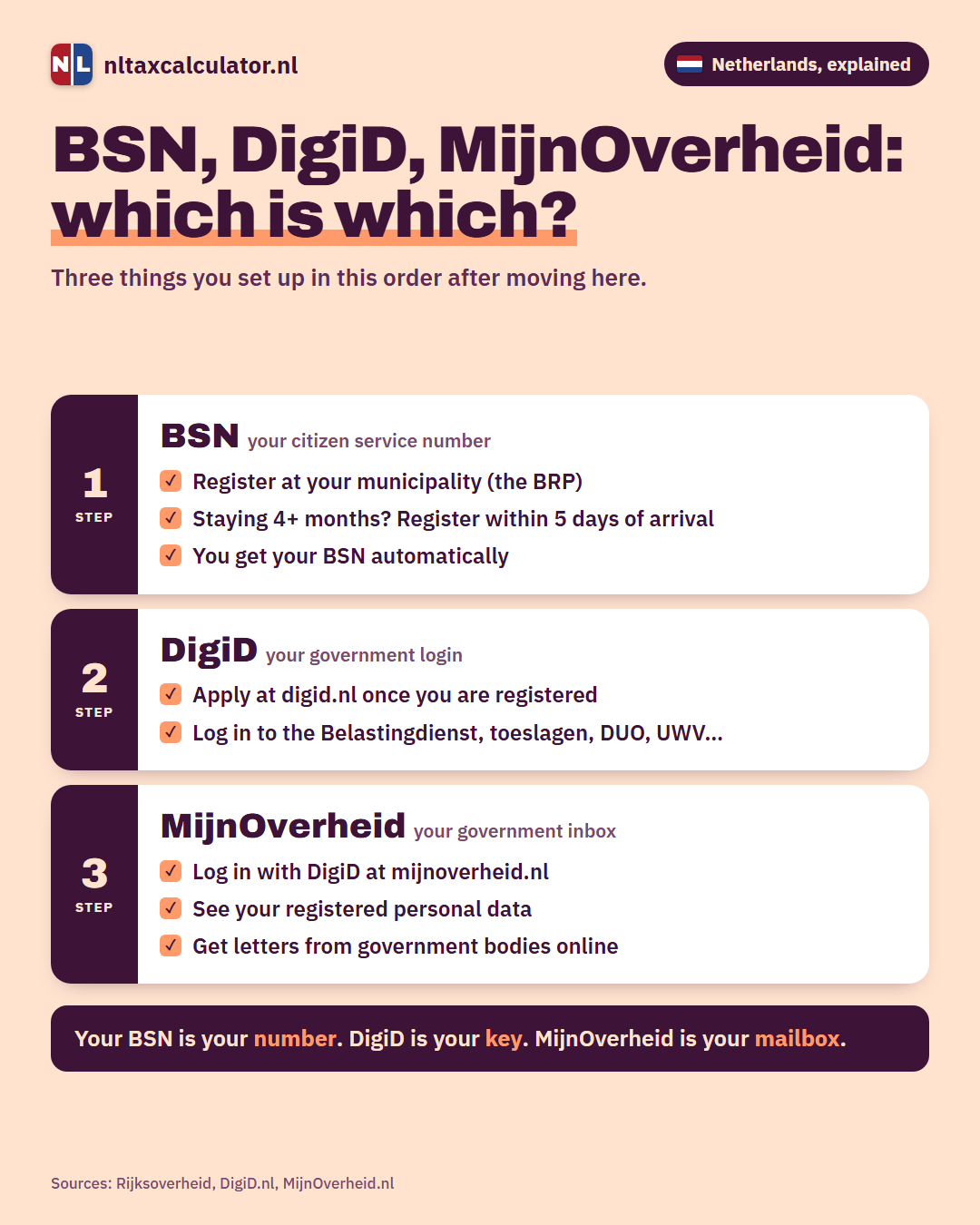
- 1Register at the municipality
Within 5 days of arriving, if you will stay at least four months. You need an address and ID; some documents need a legalised translation.
- 2Get your BSN
Your citizen service number comes with registration. Employers, banks, doctors and the tax office all ask for it.
- 3Apply for DigiD
Your login for government websites, including the tax office and your health insurer. The activation code comes by post.
- 4Open a Dutch bank account
Needed for salary, rent and paying by "pin". Most banks need your BSN and address.
- 5Take out health insurance
Within four months of starting to live or work here; the cover is backdated.
- 6Register with a GP and dentist
Do this before you need one: many practices have waiting lists.
- 7Check your tax position
The 30% ruling, tax credits and your first return.
Money and taxes
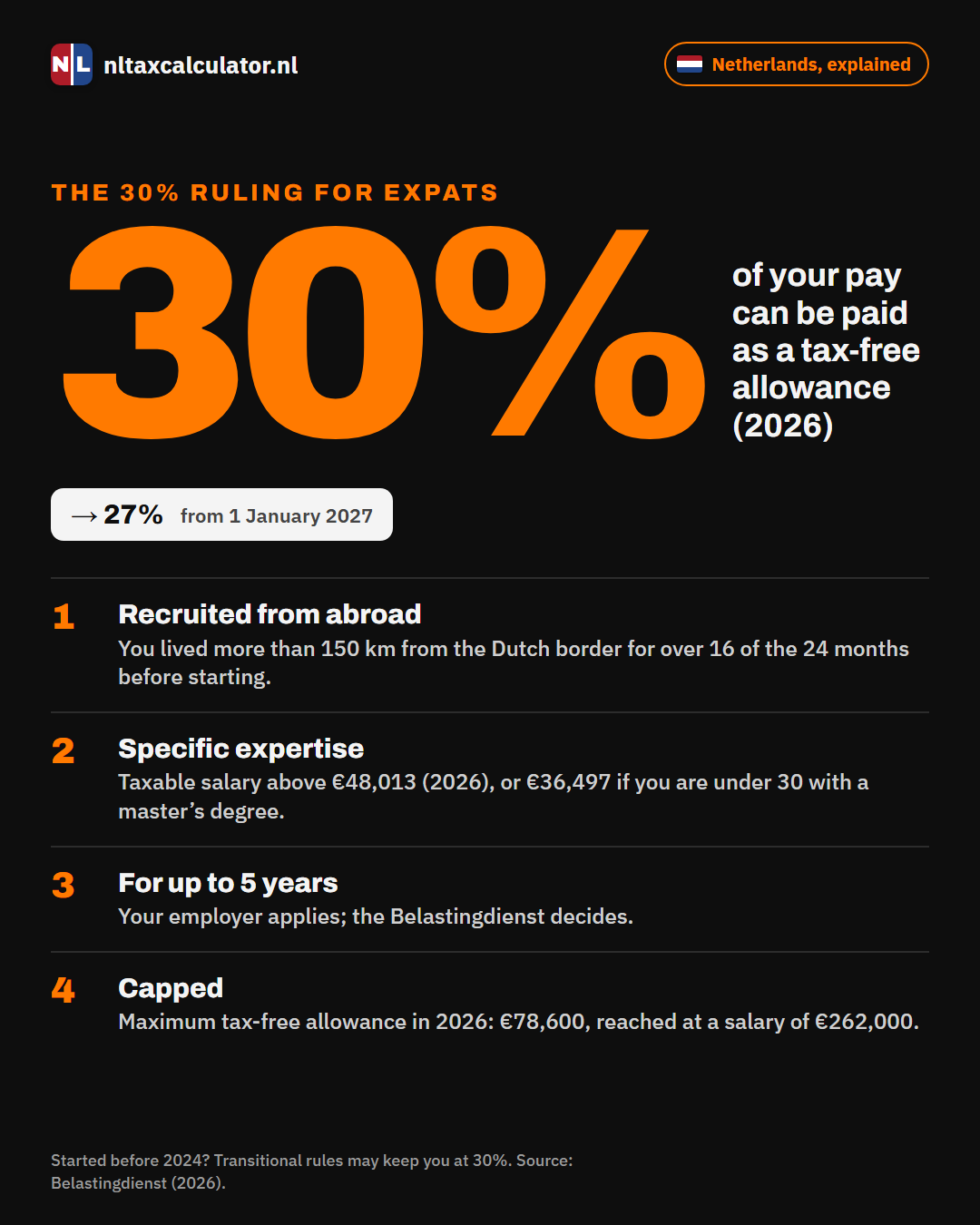
- 30% ruling
- Tax-free allowance for recruited skilled migrants; apply with your employer within four months. See the 30% ruling.
- First tax return
- In your arrival year you receive an M-form instead of a normal return. See your first year as an expat.
- Benefits
- Healthcare, rent and childcare allowances. Check the toeslagen calculator.
Housing
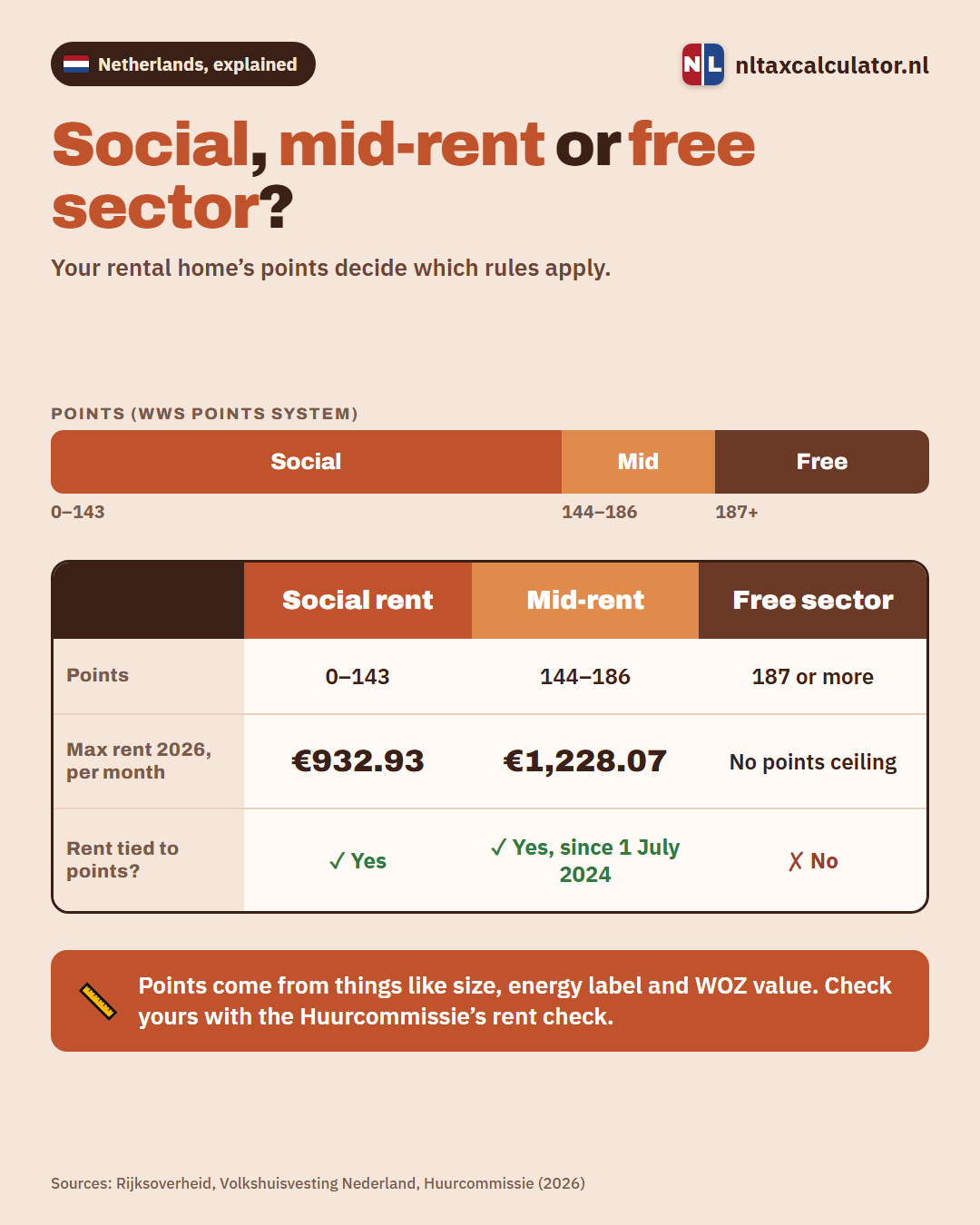
Finding housing is the hardest part in most cities. Know the rent rules before you sign: many rents are capped by a points system, and the Huurcommissie can lower an excessive rent.
Planning to buy? See buying a home and the mortgage calculator.
Language and integration
English goes a long way, but Dutch opens doors at work, in local government and with neighbours.
Some non-EU newcomers must pass a civic integration (inburgering) exam within three years.
After five years of legal residence non-EU citizens can vote in municipal elections; EU citizens immediately.
Next: get to know Dutch culture and how Dutch politics works.
Sources
This article is based on these official pages. If anything here differs from them, the official page is right.
Ready to run your own numbers?
Relocation checklist